

WHO Was the First Person Cremated in the Bible? The Shocking Truth Revealed explores a lesser-known biblical topic with clarity. It looks closely at Scripture to separate facts from assumptions. The Bible’s burial practices carry deep meaning and context. Understanding them adds insight to biblical history.
Reading Who Was the First Person Cremated in the Bible? The Shocking Truth Revealed helps believers study Scripture more carefully. It encourages thoughtful reflection instead of quick conclusions. Biblical truths are often deeper than they first appear. Learning them strengthens faith and understanding.
Who Was The First Person Cremated In The Bible? A Biblical Exploration of Fire, Death, and Burial
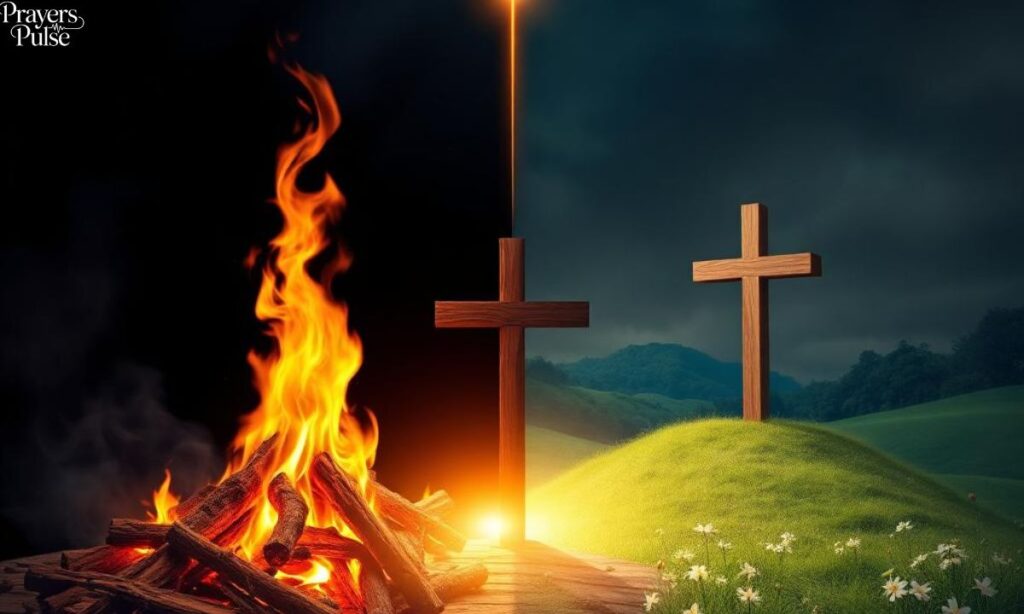
The question of who was first cremated in the Bible is more complex than it might initially appear. Unlike burial, which is consistently mentioned throughout Scripture as the standard Practice for honoring the dead, cremation—the intentional burning of human remains—is rarely discussed in positive terms.
To understand this topic fully, we must examine several biblical accounts where fire consumed human bodies, whether as divine judgment, military action, or cultural practice.
Who Was The First Person Cremated In The Bible? – Old Testament
The Old Testament provides our earliest glimpses into ancient burial customs among the Hebrew people. From the very beginning, burial was the normative practice. Abraham purchased a cave at Machpelah to bury his wife Sarah (Genesis 23), establishing a pattern that would continue throughout Israel’s history. The patriarchs—Abraham, Isaac, and Jacob—were all buried in this family tomb. Joseph, despite dying in Egypt, gave instructions that his bones be carried back to the Promised Land for proper burial (Genesis 50:25).
This consistent practice of burial reflects the ancient Israelite understanding of death, the body, and resurrection hope. The earth receiving the body mirrored the creation account where man was formed from dust and would return to dust (Genesis 3:19). Burial honored the body as God’s creation, even in death.
Who Was The First Person Cremated In The Bible? – Two Cities Of People
When we search for the first instance of bodies being consumed by fire, we encounter the dramatic account of Sodom and Gomorrah. These two cities, along with the surrounding plain, became infamous in biblical history as examples of God’s judgment against unrepentant sin. The inhabitants of these cities had given themselves over to wickedness, and their moral corruption had reached a point where divine intervention became necessary.
Abraham had interceded for these cities, asking God to spare them if even a handful of righteous people could be found within their walls (Genesis 18:23-32).
Tragically, not even ten righteous individuals could be found in Sodom, and only Lot and his daughters escaped the coming destruction. The residents of these cities would become the first large group of people whose bodies were consumed by fire—though this was divine judgment, not cremation in the traditional sense.
Who Was The First Person Cremated In The Bible? – First Cremation
If we consider the first time human bodies were consumed by fire in Scripture, we must turn to the destruction of Sodom and Gomorrah. While this wasn’t cremation as a chosen burial practice, it represents the first recorded instance where human remains were reduced to ash by fire. The entire populations of these cities perished in flames sent from heaven.
This event stands apart from later instances of cremation because it was an act of divine judgment rather than a human decision about how to dispose of remains. The people of Sodom and Gomorrah had no say in what happened to their bodies—God Himself determined their fate as punishment for their sins.
Genesis 19:24 – God Sent Fire To Destroy
“Then the LORD rained down burning sulfur on Sodom and Gomorrah—from the LORD out of the heavens” (Genesis 19:24, NIV). This verse captures the moment when God’s judgment fell upon these wicked cities.
The description is vivid and terrifying: burning sulfur, also translated as brimstone, rained down from the sky. This wasn’t an ordinary fire but a supernatural conflagration sent directly from God’s presence.
The text emphasizes that this fire came “from the LORD out of the heavens,” making clear that this was divine action, not a natural disaster. The sulfur would have created an intensely hot fire, hot enough to completely consume not just the cities’ structures but also the bodies of everyone who remained.
Archaeological evidence suggests that the region around the Dead Sea experienced catastrophic destruction consistent with this biblical account, with some sites showing signs of intense burning.
Genesis 19:28 – The Effects Of The Heavenly Fire
“He looked down toward Sodom and Gomorrah, toward all the land of the plain, and he saw dense smoke rising from the land, like smoke from a furnace” (Genesis 19:28, NIV). Abraham witnessed the aftermath of God’s judgment from a distance. The smoke rising from the valley would have been visible for miles, a sobering reminder of what had just occurred.
The comparison to “smoke from a furnace” suggests the intensity and completeness of the destruction. Everything combustible had been consumed—buildings, vegetation, and human bodies alike.
The people of Sodom and Gomorrah were reduced to ash, their bodies completely destroyed by the heavenly fire. This serves as the first recorded instance of human bodies being consumed by fire in Scripture, though again, this was judgment rather than chosen cremation.
Who Was the First Person Cremated in the Bible? — Achan — The “Troubler of Israel”
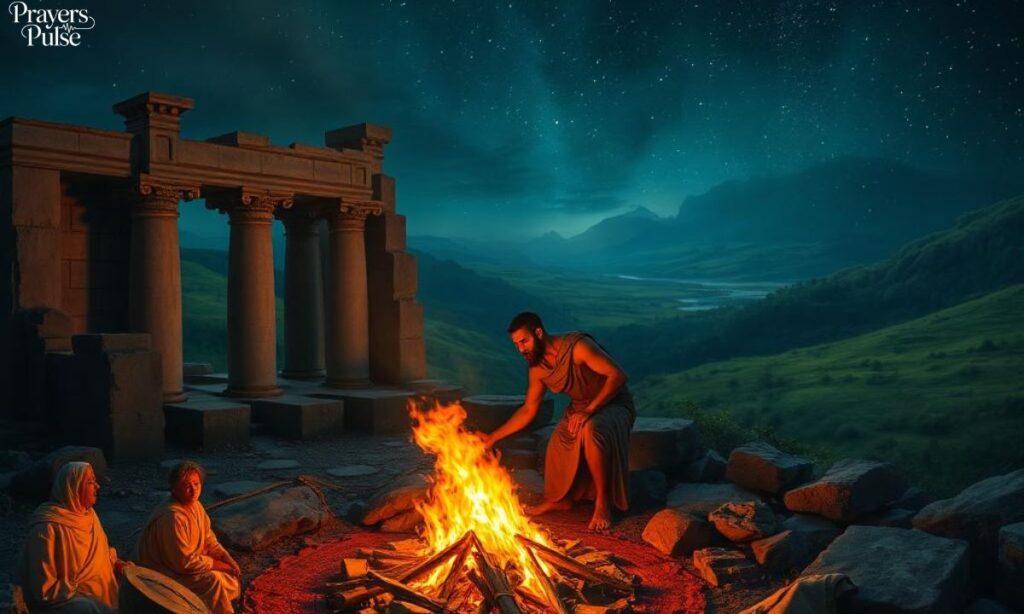
Moving forward in biblical history, we encounter the first clear instance of an individual being cremated as a form of punishment: Achan, whose disobedience brought disaster upon Israel.
After the miraculous victory at Jericho, God had commanded that all the spoils of the city be devoted to Him—nothing was to be taken for personal gain. Achan violated this command by taking a beautiful robe, silver, and gold, hiding them in his tent.
His sin resulted in Israel’s defeat at Ai and the deaths of thirty-six Israelite soldiers (Joshua 7:5). When Achan’s theft was discovered through the casting of lots, Joshua confronted him: “Why have you brought this trouble on us? The LORD will bring trouble on you today” (Joshua 7:25).
Achan, his family, his possessions, and the stolen items were taken to the Valley of Achor. There, they were stoned to death, and their bodies were burned.
“Then all Israel stoned him, and after they had stoned the rest, they burned them. Over Achan they heaped up a large pile of rocks, which remains to this day” (Joshua 7:25-26). Achan’s cremation wasn’t a burial honor but an execution method that emphasized the severity of his crime.
He had “troubled” Israel, and his punishment reflected the seriousness of violating God’s direct command. This represents the first biblically recorded cremation of a named individual, carried out as capital punishment.
Who Was The First Person Cremated In The Bible? – The Body Of King Saul
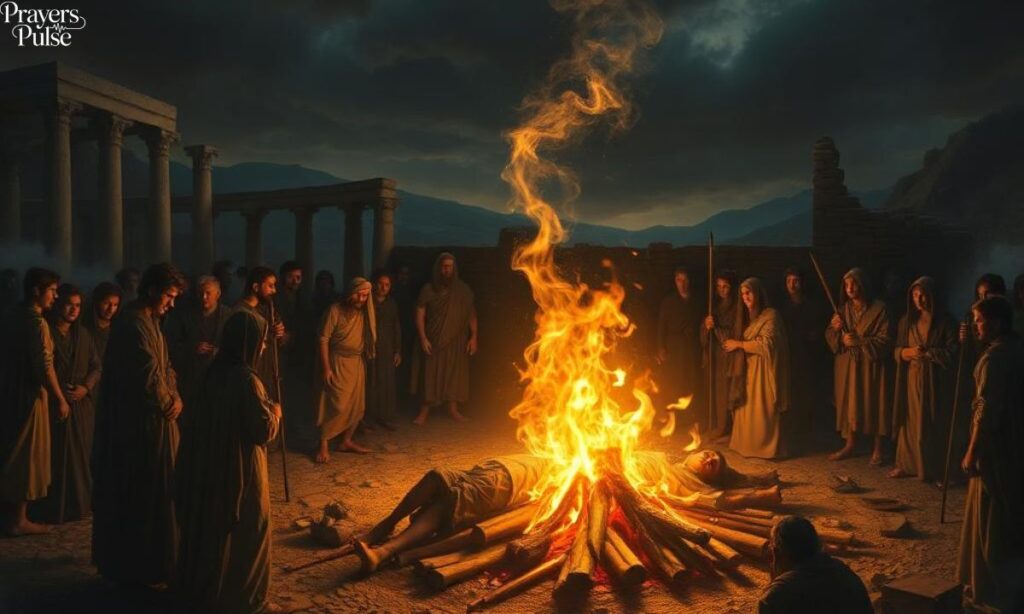
One of the most significant cremation accounts in Scripture involves Israel’s first king, Saul. After a disastrous battle with the Philistines on Mount Gilboa, Saul and three of his sons, including Jonathan, were killed. The Philistines found their bodies and, in a shameful display, fastened Saul’s body to the wall of Beth Shan (1 Samuel 31:10).
This public display of a defeated enemy was intended to humiliate Israel and dishonor their fallen king. However, the valiant men of Jabesh Gilead remembered how Saul had once rescued their city from the Ammonites (1 Samuel 11:1-11). In gratitude and respect, they traveled all night to Beth Shan, retrieved the bodies of Saul and his sons from the wall, and brought them back to Jabesh.
“When they came to Jabesh, they burned the bodies there. Then they took their bones and buried them under a tamarisk tree at Jabesh, and they fasted seven days” (1 Samuel 31:12-13).
The men of Jabesh Gilead cremated Saul and his sons before burying their bones. Scholars debate why cremation was chosen in this case—some suggest the bodies had begun to decompose or had been mutilated by the Philistines, making traditional burial impractical. Others propose that burning prevented the Philistines from recovering and further desecrating the bodies.
What’s notable is that even after cremation, the bones were given proper burial, and the people fasted in mourning. This suggests cremation was viewed as an exceptional circumstance rather than a preferred practice, but it was not inherently sinful when performed out of respect for the dead rather than as punishment.
Who Was The First Person Cremated In The Bible? – “Burnings”
The Hebrew Scriptures contain references to “burnings” associated with the deaths of certain kings, which creates some confusion about ancient Israelite burial practices.
These passages require careful examination because the burning mentioned doesn’t necessarily refer to cremation of the body itself.
2 Chronicles 16:14 – Good King Asa
“They buried him in the tomb that he had cut out for himself in the City of David. They laid him on a bier covered with spices and various blended perfumes, and they made a huge fire in his honor” (2 Chronicles 16:14, NIV).
King Asa was one of Judah’s better rulers, implementing religious reforms and removing idols from the land. When he died, he was honored with a great fire.
Most biblical scholars understand this “burning” as the burning of spices and aromatic materials—essentially an elaborate funeral pyre of incense and perfumes created in the king’s honor, not the burning of his body.
The text clearly states he was “buried,” indicating his body was interred in the traditional manner. The fire was a tribute, similar to how valuable incense might be burned at a funeral today to honor the deceased.
2 Chronicles 21:19 – Evil King Jehoram
In stark contrast to his ancestor Asa, King Jehoram was wicked, leading Judah into idolatry and murdering his own brothers.
When he died from a painful disease, his death was marked by dishonor: “He passed away, to no one’s regret, and was buried in the City of David, but not in the tombs of the kings. His people made no funeral fire in his honor, as they had for his predecessors” (2 Chronicles 21:19-20, NIV).
The absence of a burning in Jehoram’s case confirms that these “burnings” were honorific practices rather than cremation. His wickedness meant he didn’t receive the same funeral honors as righteous kings. No spices or perfumes were burned to commemorate his death—a deliberate slight that reflected the people’s judgment of his reign.
These passages demonstrate that “burnings” in connection with royal funerals referred to the burning of aromatic materials as a sign of respect, not to the cremation of bodies. Good kings received this honor; wicked kings did not.
Who Was The First Person Cremated In The Bible? – Idolatry And Human Sacrifice
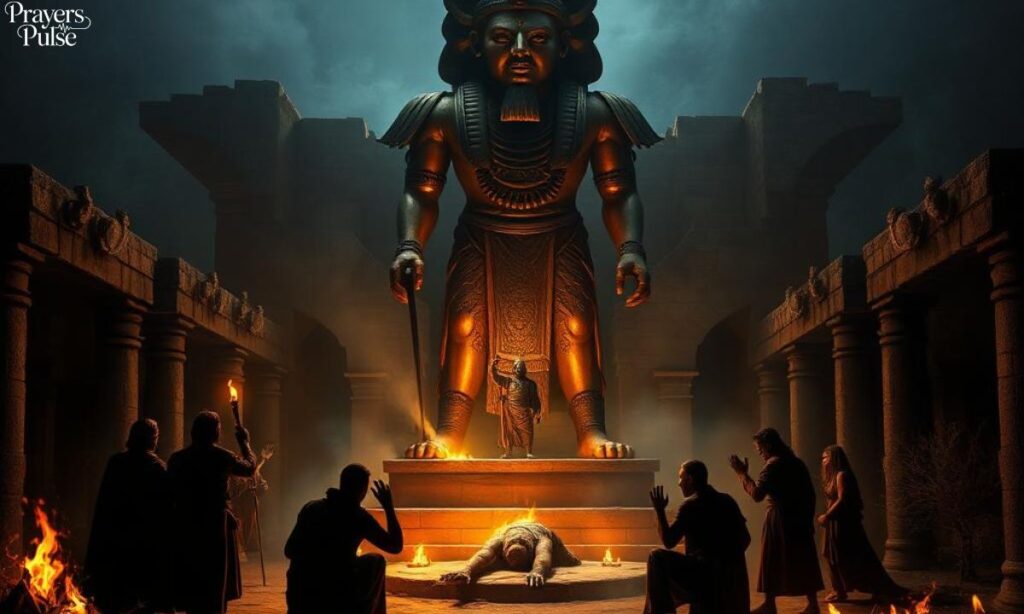
One of the darkest aspects of cremation in the biblical record involves its association with pagan worship and child sacrifice. Several passages describe the horrific practice of burning children alive as offerings to false gods, particularly Molech (or Moloch).
Understanding these passages is crucial because they reveal why fire and burning carried such negative connotations in Israelite culture.
Leviticus 18:21 – God Commanded Against Child Sacrifice
“Do not give any of your children to be sacrificed to Molech, for you must not profane the name of your God. I am the LORD” (Leviticus 18:21, NIV). This command appears within the holiness code given to Israel, surrounded by prohibitions against various sexual sins and immoral practices common among Canaan’s inhabitants.
The worship of Molech involved placing children in the heated metal arms of an idol, where they would be burned alive as sacrifices. This abomination was practiced by Israel’s pagan neighbors, and God explicitly forbade His people from participating in such evil.
The command wasn’t merely about protecting children—it was about maintaining the holiness and distinctiveness of God’s people. To burn a child as an offering was to “profane the name” of the LORD, treating Him as if He were a bloodthirsty demon rather than the loving Creator.
Deuteronomy 18:10 – God Repeated His Warning Against Child Sacrifice
“Let no one be found among you who sacrifices their son or daughter in the fire, who practices divination or sorcery, interprets omens, engages in witchcraft” (Deuteronomy 18:10, NIV). As Israel prepared to enter the Promised Land, Moses repeated the prohibition against child sacrifice, grouping it with other occult practices.
The repetition of this command throughout the Law demonstrates how strongly God opposed this practice. He wasn’t merely establishing a cultural preference; He was drawing a clear moral line.
The nations Israel would displace had engaged in these detestable practices, and God warned His people not to follow their example. Burning human beings—especially innocent children—as religious offerings was absolutely forbidden.
2 Chronicles 28:3 – King Ahaz Sacrificed His Children As An Offering To A False God
“He burned sacrifices in the Valley of Ben Hinnom and sacrificed his children in the fire, engaging in the detestable practices of the nations the LORD had driven out before the Israelites” (2 Chronicles 28:3, NIV). Tragically, despite God’s clear commands, some of Israel’s own kings fell into this evil practice.
King Ahaz of Judah sacrificed his own children to pagan deities, burning them in the Valley of Hinnom (later called Gehenna).
This valley would become synonymous with judgment and hell in Jewish thought precisely because of these abominable sacrifices performed there. Ahaz’s actions represented the depths to which Judah’s apostasy had sunk—even the king himself was willing to murder his own children in service to false gods.
2 Kings 21:6 – King Manasseh Sacrificed His Son To A False God
“He sacrificed his own son in the fire, practiced divination, sought omens, and consulted mediums and spiritists. He did much evil in the eyes of the LORD, arousing his anger” (2 Kings 21:6, NIV).
King Manasseh is often considered the most wicked king in Judah’s history, and child sacrifice was among his many abominations.
By burning his son as an offering, Manasseh not only violated God’s explicit commands but also demonstrated complete moral corruption. Later in life, Manasseh would repent after being taken captive to Babylon (2 Chronicles 33:10-13), but his earlier actions left a lasting stain on Judah’s history and contributed to the nation’s eventual exile.
Jeremiah 19:5 – The Prophet Jeremiah Mourned Over Idolatrous Evil Practices
“They have built the high places of Baal to burn their children in the fire as offerings to Baal—something I did not command or mention, nor did it enter my mind” (Jeremiah 19:5, NIV).
The prophet Jeremiah witnessed the continuation of child sacrifice during his ministry and pronounced God’s judgment upon those who practiced it.
God’s statement that such practices “did not enter my mind” is striking. Some pagan religions portrayed their deities as demanding human sacrifice, but the God of Israel found the very idea repulsive.
He had never commanded, suggested, or even contemplated requiring such offerings. The practice was completely foreign to His nature and character as a loving, just God.
Jeremiah 32:35 – The Prophet Jeremiah Wept Over The Practice Of Child Sacrifice
“They built high places for Baal in the Valley of Ben Hinnom to sacrifice their sons and daughters to Molech, though I never commanded—nor did it enter my mind—that they should do such a detestable thing and so make Judah sin” (Jeremiah 32:35, NIV).
Jeremiah returns to this theme, emphasizing again that God never commanded child sacrifice and that the practice was leading Judah into sin.
These verses reveal why burning and fire had such negative associations in Israelite culture when connected with death.
While fire served many legitimate purposes—cooking, warmth, purification, and even some sacrifices—the burning of human beings, especially as pagan offerings, was absolutely condemned. This cultural and theological background helps explain why cremation was rarely practiced in ancient Israel and why burial remained the standard.
Who Was The First Person Cremated In The Bible? – New Testament
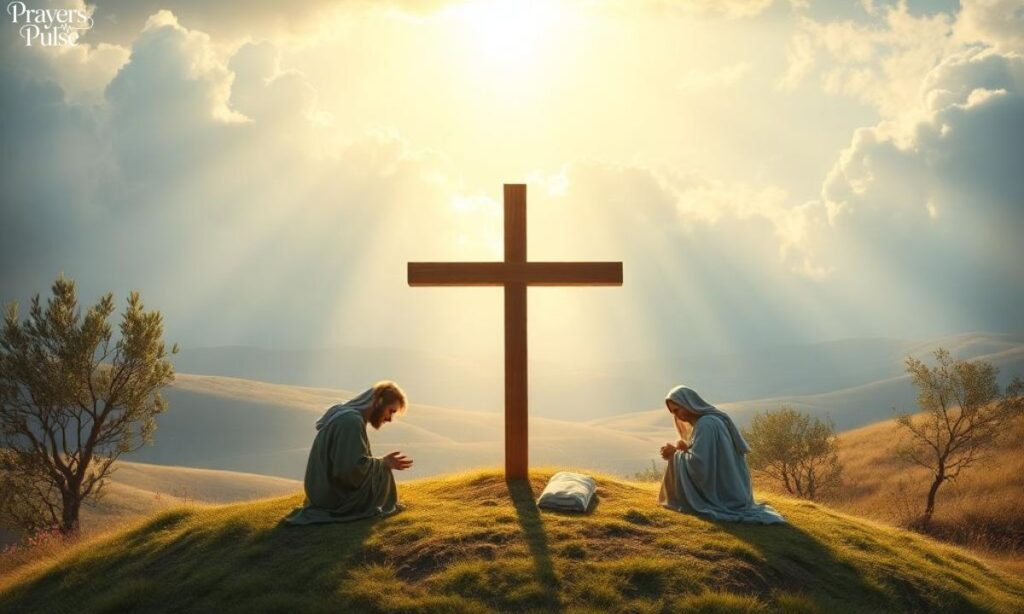
Moving into the New Testament era, burial continued as the universal practice among Jews and early Christians. Despite living under Roman rule, where cremation was common, the early church maintained the Jewish practice of burial.
This continuity reflected the Christian belief in bodily resurrection, which made the respectful treatment of the deceased body important.
Matthew 14:12 – John The Baptist Was Buried
“John’s disciples came and took his body and buried it. Then they went and told Jesus” (Matthew 14:12, NIV). When Herod beheaded John the Baptist, his disciples retrieved his body and gave it a proper burial. Even though John had been executed as a criminal, his followers ensured he received a dignified interment.
This passage demonstrates that burial remained the expected practice even for those who died violently or unjustly.
John’s disciples didn’t consider alternative methods of disposing of his remains—burial was the natural, respectful choice. After completing this sorrowful duty, they went to inform Jesus of what had happened.
Acts 5:9-10 – Ananias And Sapphira Were Buried
When Ananias and Sapphira died suddenly after lying to the Holy Spirit, the young men of the church immediately arranged for their burial: “At that moment she fell down at his feet and died. Then the young men came in and, finding her dead, carried her out and buried her beside her husband” (Acts 5:10, NIV).
Even in this case of divine judgment upon church members who had sinned, burial was the immediate response. There was no discussion of alternative methods—the early Christians simply followed the established practice of laying the dead to rest in the earth.
The quick burial (both Ananias and Sapphira were buried the same day they died) reflected Jewish customs regarding the dead, which typically called for burial before sunset.
Acts 8:2 – Stephen – The First Martyr Was Buried
“Godly men buried Stephen and mourned deeply for him” (Acts 8:2, NIV). Stephen, the first Christian martyr, was stoned to death for his bold testimony about Jesus Christ. Despite the violent nature of his death and the persecution facing the early church, devoted believers risked potential consequences to give Stephen a proper burial.
The text specifically mentions that “godly men” performed this service, suggesting it was seen as a righteous act of devotion.
They also “mourned deeply,” indicating that the burial process was accompanied by appropriate grief and respect for the deceased. This pattern—faithful believers ensuring proper burial for the dead, even at personal risk—would characterize the church throughout periods of persecution.
Who Was The First Person Cremated In The Bible? – Burial or Cremation for the Christian Today?
The Bible’s consistent pattern of burial over cremation raises important questions for Christians today: Does God require burial? Is cremation sinful? How should modern believers approach this decision?
First, it’s important to acknowledge that the Bible nowhere explicitly condemns cremation as a burial practice chosen by believers. The negative instances of burning in Scripture involve either divine judgment (Sodom and Gomorrah), capital punishment (Achan), or pagan religious practices (child sacrifice).
King Saul’s cremation appears to have been done respectfully under exceptional circumstances.
The biblical preference for burial seems rooted in several theological principles. Burial honors the body as God’s creation, made in His image. It reflects the agricultural imagery used in Scripture—a seed planted in the ground that will one day sprout to new life (1 Corinthians 15:42-44).
Burial also parallels Christ’s own burial and resurrection, which is central to Christian hope.However, Christians throughout history have recognized that God’s power to resurrect believers doesn’t depend on the condition of their physical remains.
Martyrs burned at the stake, soldiers lost at sea, and countless others whose bodies were destroyed by various means will all be resurrected just as surely as those who were traditionally buried. The God who created humanity from dust can certainly recreate our glorified bodies regardless of what happened to our earthly remains.
For Christians today, the decision between burial and cremation often involves practical considerations: cost, family preferences, environmental concerns, and cultural context. What matters most is that the choice is made prayerfully, with respect for the deceased, and in awareness of biblical principles regarding the body and resurrection.
Some Christians prefer burial because it follows biblical precedent and provides a physical location where loved ones can remember and honor the deceased. Others choose cremation for practical or personal reasons while maintaining full confidence in God’s resurrection power.
Neither choice should be viewed as more spiritual or pleasing to God, though individual Christians and churches may have different convictions based on their interpretation of Scripture and tradition.
Who Was The First Person Cremated In The Bible? – Jesus Christ — Our Perfect Example

When considering any question of Christian practice, we ultimately look to Jesus Christ as our perfect example. How was Jesus’ body treated after His death?
The Gospel accounts provide detailed descriptions of Jesus’ burial. Joseph of Arimathea, a wealthy member of the Sanhedrin who had become a follower of Jesus, requested permission from Pilate to take Jesus’ body.
Joseph took the body, wrapped it in a clean linen cloth, and placed it in his own new tomb that he had cut out of the rock. He rolled a big stone in front of the entrance to the tomb and went away” (Matthew 27:59-60, NIV).
Jesus was buried according to Jewish custom, with His body wrapped in linen cloths and placed in a rock-hewn tomb. John’s Gospel adds that Nicodemus brought a mixture of myrrh and aloes, about seventy-five pounds, to anoint the body (John 19:39). This was traditional Jewish burial preparation, demonstrating respect for the deceased.
The burial of Jesus serves multiple theological purposes. It confirmed His actual death—Jesus truly died; His death wasn’t an illusion.
The burial also fulfilled prophecy, as Isaiah 53:9 predicted that the Messiah would be “assigned a grave with the wicked, and with the rich in his death.” Most importantly, Jesus’ burial set the stage for the greatest miracle in human history: His resurrection from the dead.
“He is not here; he has risen, just as he said” (Matthew 28:6). On the third day, Jesus rose from the dead, leaving the tomb empty. His burial and resurrection established the pattern that all believers will follow.
We are buried with Christ through baptism into death, so that just as Christ was raised from the dead, we too may walk in the newness of life (Romans 6:4). And one day, our mortal bodies will be raised imperishable, transformed to be like His glorious body (Philippians 3:21).
Frequently asked questions
Is cremation mentioned in the Bible?
Yes, the Bible mentions bodies being burned in a few specific historical situations.
Who is considered the first person cremated in the Bible?
King Saul is often considered the first, as his body was burned after death.
Where is King Saul’s cremation mentioned in Scripture?
It is recorded in 1 Samuel 31:12–13.
Why was King Saul’s body burned?
His body was burned to prevent further dishonor by enemies.
Was cremation a common practice in biblical times?
No, burial was the normal and preferred practice among Israelites.
Does the Bible command or forbid cremation?
The Bible does not directly command or forbid cremation.
Is cremation viewed negatively in the Bible?
In some cases, burning is linked to judgment, but not always.
How did biblical figures usually handle the dead?
Most biblical figures were buried in tombs or graves.
Does cremation affect salvation according to the Bible?
No, salvation is based on faith, not burial practices.
What is the biblical takeaway about cremation?
God’s power over resurrection is not limited by how a body is laid to rest.
Conclusion
Who Was the First Person Cremated in the Bible? The Shocking Truth Revealed helps readers understand lesser-known biblical practices. It shows how burial customs reflected culture, circumstances, and respect. This topic encourages deeper study of Scripture and history. It reminds us that the Bible holds many surprising details.
Exploring Who Was the First Person Cremated in the Bible? The Shocking Truth Revealed strengthens biblical knowledge and curiosity. It invites believers to read Scripture with greater attention and context. Understanding these truths builds spiritual insight. Every detail adds depth to God’s Word.

Denzel is a passionate faith writer with four years of experience in prayer and Bible blogging. He now contributes has expertise to PrayersPulse.com, creating inspiring content that strengthens prayer life and deepens understanding of Scripture.