

Understanding Biblically Accurate Angels: Their True Nature and Significance in Scripture explores how angels are described in the Bible beyond the common image of winged humans. Scripture presents angels as powerful spiritual beings created by God to serve His purposes, deliver messages, offer protection, and carry out divine commands..
When reflecting on Understanding Biblically Accurate Angels: Their True Nature and Significance in Scripture, it becomes clear that different types of angels serve unique roles throughout the Bible. Beings such as cherubim and seraphim are depicted with extraordinary features that symbolize holiness, worship, and God’s glory.
What Does the Word “Angel” Actually Mean?
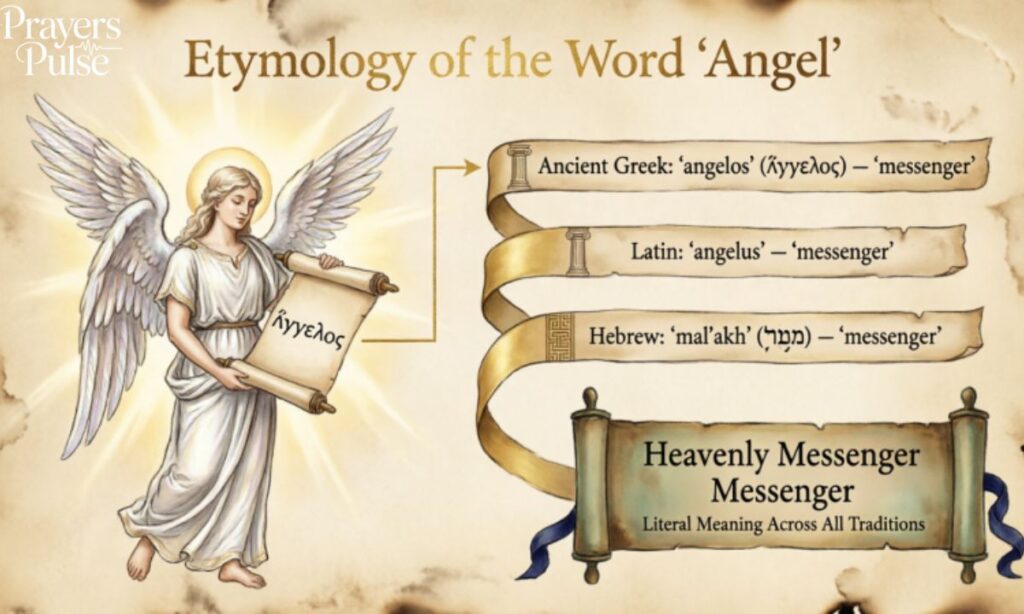
The word angel comes from the Greek word angelos and the Hebrew word malak. Both words mean the same simple thing — messenger.
So the word itself is not describing what they are made of or what they look like. It is describing what they do. They are messengers sent from God.
However, not every being called an angel in the Bible looks the same or does the same job. The Bible describes several distinct types of heavenly beings, and they are wildly different from one another.
Do Biblical Angels Have Wings?
This is where things get interesting. The answer is — some do, some do not, and some have far more wings than you would ever expect.
The angels that appear most frequently in the Bible to deliver messages to humans are actually never described as having wings at all. When angels appear to Abraham, to Lot, to Gideon, to Mary, and to the shepherds, there is no mention of wings. They look like people. They walk, talk, sit down, and eat food.
Genesis 18 describes three visitors who come to Abraham. He runs to meet them, bows down, and offers them a meal. They sit and eat. Nothing in that passage screams supernatural — until you realize these are divine messengers and one of them is the Lord Himself appearing in human form.
The angels that do have wings in the Bible are specific categories of heavenly beings, and their wings are not the soft feathery kind from greeting cards. They are described in ways that are bizarre, terrifying, and magnificent all at once.
The Different Types of Angels in the Bible
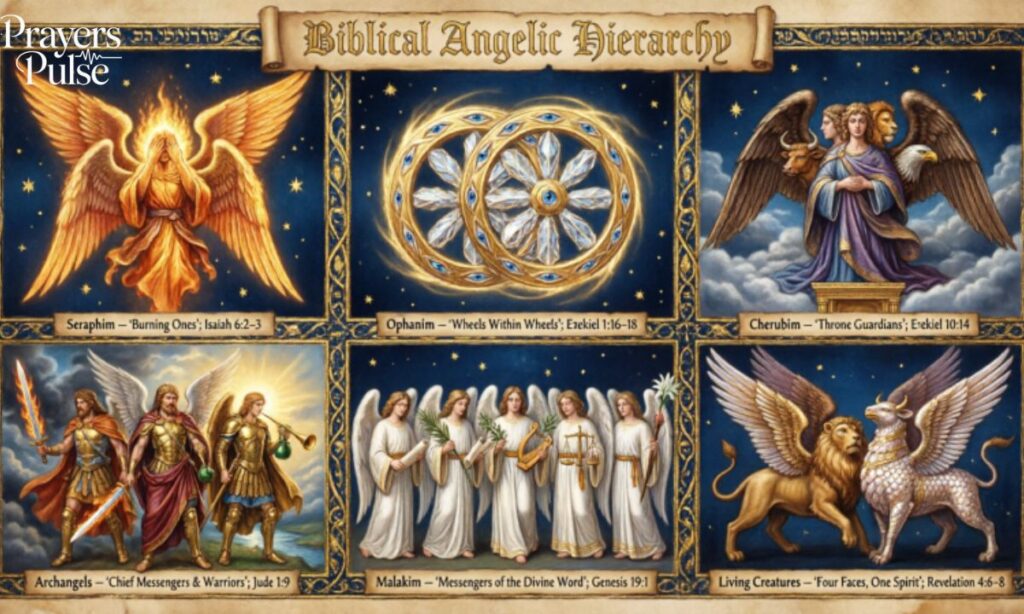
The Seraphim
These appear in Isaiah 6 and they are genuinely one of the most striking descriptions in all of Scripture.
Isaiah sees the Lord seated on a high and exalted throne, and around Him are the Seraphim. Here is how they are described:
“Each had six wings: with two he covered his face, with two he covered his feet, and with two he flew.”
Six wings. They use two to cover their faces — even these powerful beings cannot look fully at God. They use two to cover their feet — a sign of humility and reverence. And two for flying.
The word Seraphim comes from the Hebrew root meaning to burn. They are fiery beings. Burning ones.
They are not delicate. They are not gentle background figures. They are crying out to one another in voices so powerful that the doorposts and thresholds of the temple shake and the entire building fills with smoke.
They cry: “Holy, holy, holy is the Lord Almighty; the whole earth is full of his glory.”
When Isaiah sees this, he does not feel peaceful and warm. He cries out in absolute terror: “Woe to me! I am ruined! For I am a man of unclean lips.” He thinks he is going to die.
One of the Seraphim then flies to him, takes a live coal from the altar with tongs, and presses it to Isaiah’s lips to purify him. These are not soft background beings. They are blazing, shaking-the-foundations, coal-touching messengers of a holy God.
The Cherubim
Cherubim in popular culture are the chubby little baby angels — called putti — that float around in Renaissance paintings. They are perhaps the biggest visual lie in all of religious art.
The biblical Cherubim are terrifying guardians of extraordinary power.
Their first appearance is in Genesis 3:24, immediately after the fall of Adam and Eve. God places Cherubim at the east of the Garden of Eden to guard the way to the Tree of Life. They are not welcoming. They are armed with a flaming sword that flashes back and forth. Their job is to keep humanity out.
The most detailed description of Cherubim comes from Ezekiel 1 and 10, and it is one of the most astonishing passages in the entire Bible.
Ezekiel sees a great storm cloud with flashing lightning and brilliant light. Out of the fire come four living creatures. Each one has:
- Four faces — the face of a human, the face of a lion, the face of an ox, and the face of an eagle
- Four wings — two stretched upward touching each other, two covering their bodies
- Straight legs with feet like the hooves of a calf, gleaming like burnished bronze
- Human hands under their wings
- Their entire bodies, including their wings and hands, are covered with eyes
Alongside each creature is a wheel — but not a simple wheel. Each wheel intersects with another at right angles, able to move in any direction without turning. And the rims of the wheels are full of eyes all around.
Above these creatures is something like a vault or an expanse, gleaming and awesome, like crystal stretched out over their heads. And above that is the likeness of a throne, and above the throne is a figure of blazing fire and brilliant light in human form — the glory of God.
Ezekiel’s response? He falls face down on the ground.
The Cherubim were also placed on the Ark of the Covenant — two golden figures facing each other with their wings spread upward over the mercy seat. This was not decorative. It was a representation of God’s actual throne room. The space between the Cherubim was considered the meeting place between God and humanity.
The Ophanim — The Wheels
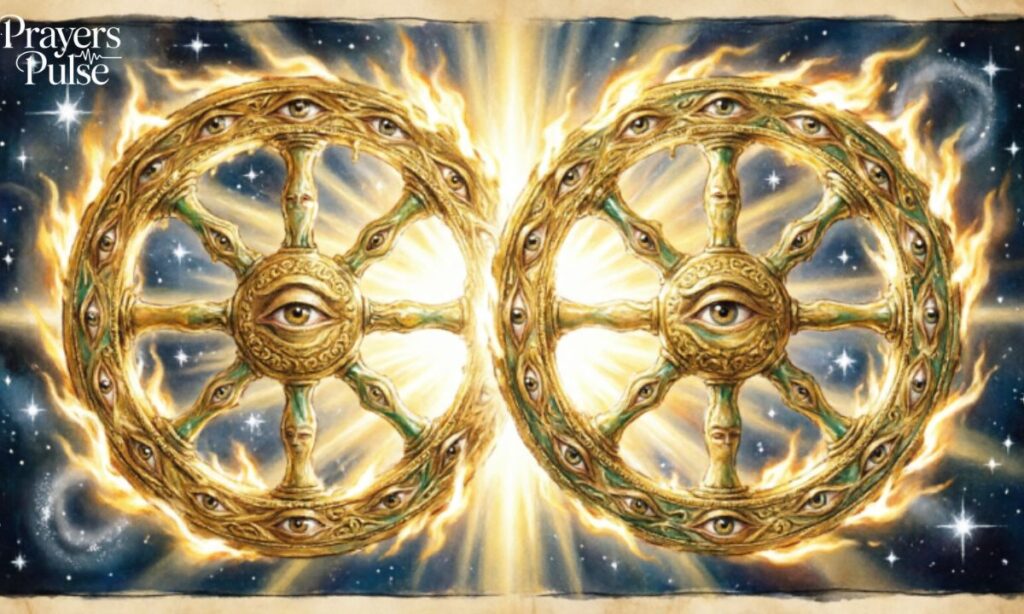
Some scholars separate the wheels described in Ezekiel from the Cherubim themselves and call them the Ophanim — a Hebrew word literally meaning wheels.
These are the creatures that went viral on the internet as “biblically accurate angels,” and honestly, it is easy to see why.
They are described in Ezekiel 1:15–21 as wheels within wheels, their rims towering and awesome, covered all around with eyes. When the living creatures moved, the wheels moved. When they stopped, the wheels stopped. When they rose from the ground, the wheels rose too. The spirit of the living creatures was in the wheels.
There is debate about whether these are separate beings or the physical vehicle of the Cherubim’s movement, but either way — they are nothing like anything in a Christmas decoration.
Regular Messenger Angels
These are the angels most people in the Bible actually encounter, and as mentioned earlier, they usually appear in human form.
When angels visit Lot in Sodom in Genesis 19, the men of the city try to get to them — they look human enough that people interact with them as though they are men. Nothing obviously supernatural is mentioned about their appearance.
When the angel Gabriel appears to Mary in Luke 1, the text says she is troubled and afraid — but the fear seems to come from the encounter and the message, not from some terrifying multi-faced appearance.
When angels appear at the empty tomb in Matthew 28, one is described as having an appearance like lightning and clothes white as snow — and the guards shake and become like dead men. That is clearly a more openly supernatural manifestation.
So these messenger angels seem to have the ability to appear in ways that range from fully human to openly blazing and overwhelming. They calibrate their appearance based on what the situation requires — but even in their more approachable forms, the response of the people who meet them is almost always immediate fear.
The Four Living Creatures of Revelation
Revelation 4 gives us another description of heavenly beings around God’s throne that echoes Ezekiel but adds new details.
John sees four living creatures around the throne of God:
- The first is like a lion
- The second is like an ox
- The third has a face like a man
- The fourth is like a flying eagle
Each one has six wings and is full of eyes all around and within. Day and night they never stop saying: “Holy, holy, holy is the Lord God Almighty, who was, and is, and is to come.”
The eyes are everywhere. The constant motion. The ceaseless worship. This is not the quiet harp-playing image of popular culture. This is something ancient, alien to our senses, and utterly devoted to the holiness of God.
The Archangels
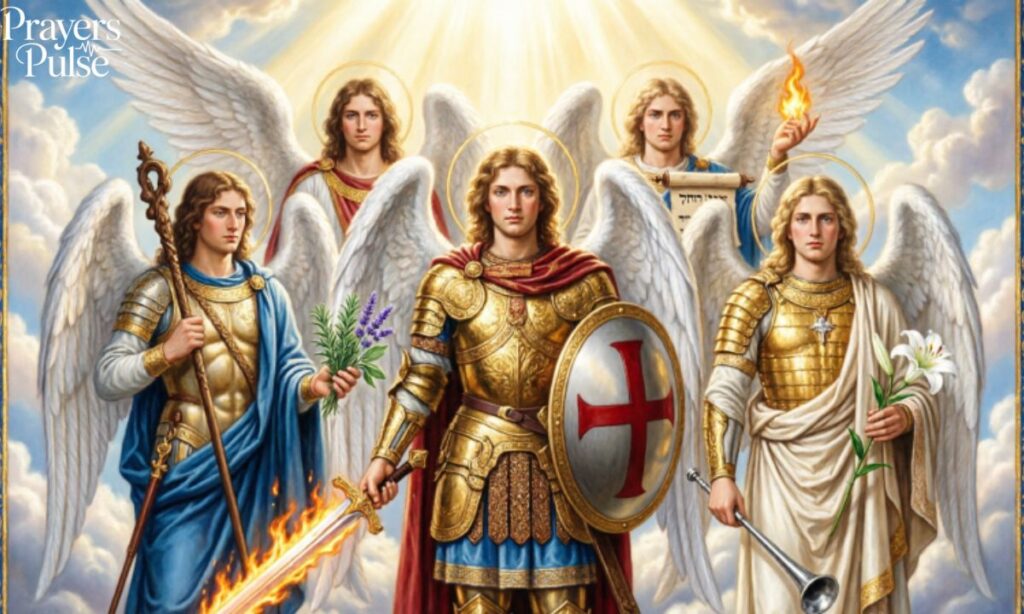
The Bible specifically uses the title archangel only twice, and only one angel is actually called an archangel by name in Scripture — Michael.
Michael is described as a warrior angel, a great prince who stands up for God’s people. In Daniel 10, a heavenly messenger tells Daniel that Michael came to help him fight against the “prince of Persia” — a spiritual battle happening in an invisible realm. In Revelation 12, Michael leads the heavenly armies against the dragon and his angels.
Gabriel is the other angel named in the Bible. He appears to Daniel, to Zechariah, and to Mary. His role is consistently that of a messenger who delivers major announcements. He is not called an archangel in the Bible directly, though tradition assigns him that title.
The idea that there are seven archangels comes from the book of Tobit and other texts outside the Protestant Bible canon, not from Scripture itself.
Angels Are Not Dead Humans
One of the most common cultural beliefs is that when people die, they become angels. This is a comforting thought, but it is not biblical.
Angels are an entirely separate category of being from humans. They were created by God independently. Humans do not become angels when they die.
In fact, 1 Corinthians 6:3 says that believers will one day judge angels — which implies humans in their redeemed state will actually have a higher standing than angels in some sense.
Hebrews 1:14 describes angels as “ministering spirits sent to serve those who will inherit salvation.” In other words, angels serve believers — not the other way around.
Angels Do Not Have Halos
The glowing circle above an angel’s head — the halo — is not a biblical description. It came from Greek and Roman art, where halos were used to depict gods and divine beings. Early Christian artists borrowed the image and applied it to Christ, then to angels and saints.
The Bible does describe angels as surrounded by light and glory, but there is no halo sitting above anyone’s head in Scripture. The light in biblical accounts tends to surround the whole being or fill the environment — not float as a ring over the head.
Angels Are Incredibly Powerful
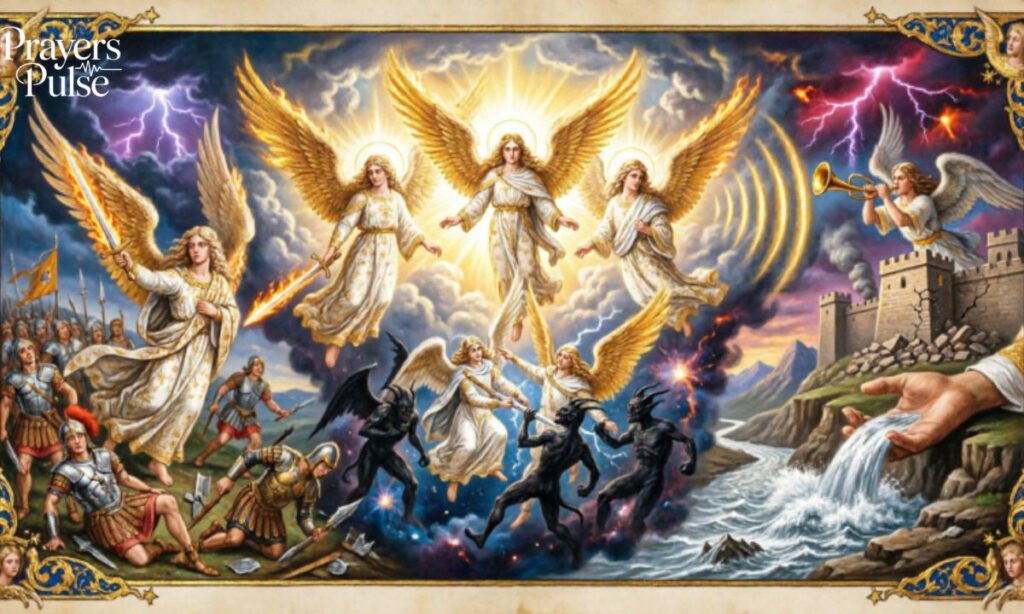
The popular image of angels is gentle and soft. The biblical image is something else entirely.
- A single angel killed 185,000 Assyrian soldiers in one night — 2 Kings 19:35
- An angel rolled away the stone from Jesus’s tomb and caused trained Roman soldiers to faint — Matthew 28:2–4
- Angels are described as mighty and powerful in 2 Thessalonians 1:7 and Psalm 103:20
- They excel in strength and carry out God’s word with speed
- In Revelation, a single angel binds Satan and throws him into the Abyss — Revelation 20:1–3
These are not gentle background figures. They are warriors, messengers, guardians, and agents of divine power operating on a level far beyond human capacity.
Angels Are Not to Be Worshipped
Despite their power and glory, the Bible is very clear that angels are not to be worshipped.
In Revelation 19:10, the apostle John falls at an angel’s feet to worship it. The angel immediately stops him: “Don’t do that! I am a fellow servant with you and with your brothers and sisters who hold to the testimony of Jesus. Worship God!”
The same thing happens in Revelation 22:8–9. John does it again — falls at the angel’s feet — and again the angel refuses worship immediately.
Colossians 2:18 warns against the worship of angels as a form of false religion. Angels themselves consistently point away from themselves and toward God.
They are powerful, yes. They are glorious, yes. But they are servants and creatures, not objects of worship.
What Angels Actually Do
Beyond their appearance, the Bible describes a wide range of things angels actually do:
- Deliver messages from God to humans — Gabriel to Mary, the angel to Joseph in dreams
- Protect and guard — Psalm 91:11 says God commands His angels to guard believers in all their ways
- Carry out judgment — the plagues in Revelation are poured out by angels
- Wage spiritual warfare — Michael fighting in Daniel 10 and Revelation 12
- Worship God continuously — the creatures in Isaiah 6 and Revelation 4 never stop
- Minister to people in need — angels ministered to Jesus after his temptation in Matthew 4:11
- Escort souls — in Luke 16:22, angels carry the soul of Lazarus to Abraham’s side
- Announce major events — the birth of Jesus, the resurrection, the second coming
They are busy, purposeful, and completely devoted to the will of God.
The Angel of the Lord
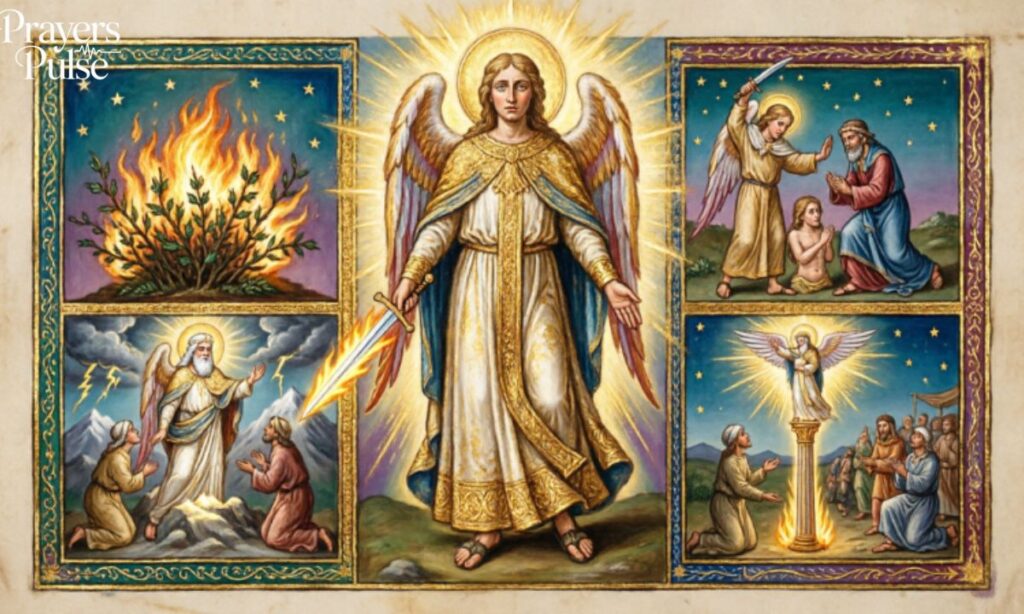
One of the most fascinating and debated figures in the Old Testament is the Angel of the Lord — a specific and unique figure who appears throughout Scripture.
What makes him remarkable is that when he speaks, he sometimes speaks as God in the first person. People who encounter him often respond as though they have seen God himself.
- When Hagar meets the Angel of the Lord in Genesis 16, she says: “You are the God who sees me.”
- When the Angel of the Lord appears to Moses in the burning bush in Exodus 3, he speaks as God: “I am the God of your father, the God of Abraham.”
- When Gideon sees him in Judges 6, he cries out: “I have seen the angel of the Lord face to face!” — and fears he will die
Many theologians believe the Angel of the Lord in the Old Testament is a pre-incarnate appearance of Jesus Christ — the Son of God appearing in visible, physical form before His birth in Bethlehem. This is called a theophany or more specifically a Christophany.
Whether or not that interpretation is correct, the Angel of the Lord is clearly distinct from ordinary angels and occupies a uniquely elevated position in Scripture.
Angels Exist in Enormous Numbers
The Bible does not try to count angels, but the numbers it hints at are staggering.
Hebrews 12:22 refers to “thousands upon thousands of angels in joyful assembly.”
Revelation 5:11 says: “Then I looked and heard the voice of many angels, numbering thousands upon thousands, and ten thousand times ten thousand.”
That last phrase — ten thousand times ten thousand — is 100 million. And John says it goes beyond even that count.
Daniel 7:10 describes the heavenly court: “Thousands upon thousands attended him; ten thousand times ten thousand stood before him.”
When Jesus was being arrested and told Peter to put his sword away, He said: “Do you think I cannot call on my Father, and he will at once put at my disposal more than twelve legions of angels?” The Roman legion was 6,000 soldiers. Twelve legions would be 72,000 angels — available instantly, just for that one moment.
The angelic host is vast beyond what we can fully picture.
Do Angels Have Free Will?
The fact that Satan and other angels fell tells us that angels do have genuine free will. They are not robots programmed to obey. They made real choices.
Jude 1:6 refers to “the angels who did not keep their positions of authority but abandoned their proper dwelling.” These are fallen angels who chose rebellion.
The angels who remained faithful are described in 1 Timothy 5:21 as “elect angels” — suggesting there is something about their confirmed status of holiness and loyalty.
The faithful angels serve God not because they are forced to but because they genuinely choose to. Their worship in passages like Revelation 4 and Isaiah 6 reads as authentic and passionate, not mechanical.
Angels and Humans — The Relationship
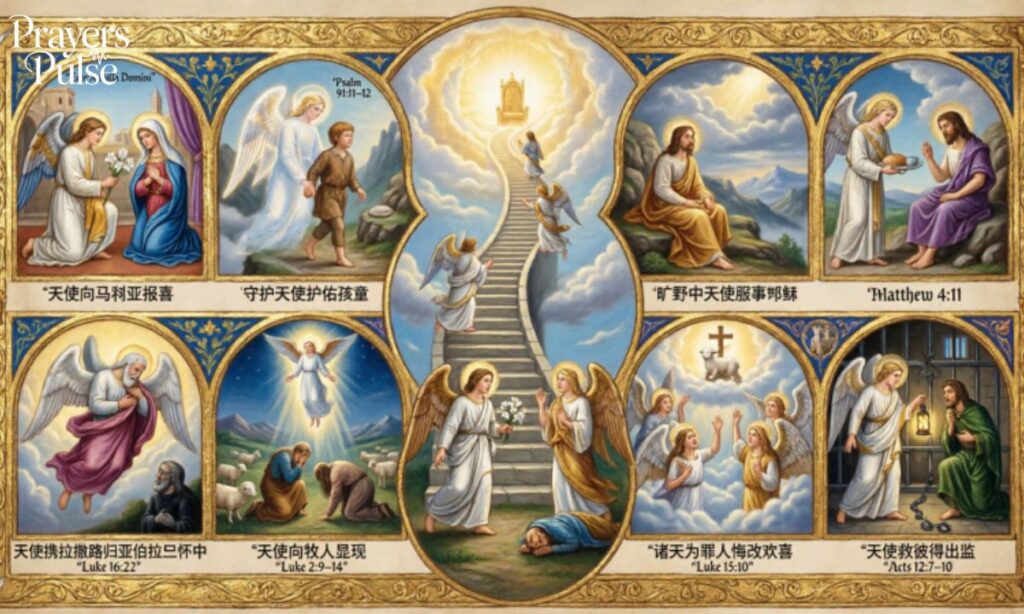
The relationship between angels and humans in the Bible is close but carefully ordered.
Hebrews 13:2 gives one of the most remarkable instructions in the New Testament: “Do not forget to show hospitality to strangers, for by so doing some people have shown hospitality to angels without knowing it.”
Angels can walk among us in human form completely undetected. That is both wonderful and deeply sobering.
Psalm 34:7 says: “The angel of the Lord encamps around those who fear him, and he delivers them.”
Luke 15:10 says there is joy in the presence of the angels of God over one sinner who repents. Angels are emotionally engaged in what happens to humans. They watch, they rejoice, they serve.
1 Corinthians 11:10 and 1 Peter 1:12 both suggest that angels observe human behavior and are deeply interested in what God is doing among humanity. Peter says they “long to look into” the things of the gospel — as if it is something even they find astonishing and beautiful.
Why Does This Matter?
Understanding what the Bible actually says about angels matters for a few important reasons.
First, it gives you a far bigger and more awe-inspiring picture of the spiritual world around us. You are not alone in a cold material universe. There is an entire vast realm of powerful, purposeful, worshipping beings engaged in God’s work — some of whom may be watching over you right now.
Second, it protects you from the opposite errors. One error is dismissing angels entirely as mythology. The other error is becoming obsessed with them, trying to communicate with them, or treating them as beings to be pursued and consulted. Both errors miss the point. Angels are real and powerful, but they exist to point to God — not to become a focus themselves.
Third, it corrects the sentimentality that has crept into our picture of the spiritual world. The Bible’s God is not a soft, domesticated figure, and neither are His messengers. They are holy, blazing, powerful, and utterly devoted to a God whose holiness makes entire buildings shake.
Frequently asked questions
What Are Biblically Accurate Angels?
They are angels described in Scripture, which often appear very different from the winged human figures seen in modern art.
Why Do Biblically Accurate Angels Look Unusual?
Many biblical descriptions use symbolic imagery to convey their power, holiness, and heavenly purpose.
Are Angels Always Human-Like in the Bible?
No, some angels appear as humans, while others are described with extraordinary and awe-inspiring forms.
What Are Seraphim in the Bible?
Seraphim are heavenly beings described as having six wings and serving in God’s presence.
What Are Cherubim According to Scripture?
Cherubim are powerful angelic beings often depicted with multiple faces and wings.
Do Angels Have Many Eyes in the Bible?
Some visions, especially in Ezekiel and Revelation, describe heavenly beings covered with eyes.
Why Do Angels Often Say “Do Not Be Afraid”?
Their appearance and divine authority can be overwhelming, so they reassure people they encounter.
Are Biblically Accurate Angels the Same as Guardian Angels?
Not exactly, as the Bible describes various types of angels with different roles and responsibilities.
What Is the Main Purpose of Angels in the Bible?
They serve God by delivering messages, providing protection, carrying out divine tasks, and offering worship.
Why Are People Fascinated by Biblically Accurate Angels?
Their unique descriptions reveal a more mysterious and powerful image of heavenly beings than popular culture often portrays.
Conclusion
Understanding Biblically Accurate Angels: Their True Nature and Significance in Scripture reveals that angels are far more complex and awe-inspiring than many modern portrayals suggest. Scripture describes them as powerful spiritual beings created by God to serve His purposes, deliver messages, and carry out divine assignments. Their appearances and roles reflect God’s majesty, holiness, and authority.
Ultimately, Understanding Biblically Accurate Angels: Their True Nature and Significance in Scripture helps believers gain a deeper appreciation for the spiritual realm and God’s divine order. These heavenly beings remind us of God’s presence, protection, and sovereignty throughout biblical history. This understanding strengthens faith and encourages a greater reverence for the truths found in Scripture.

Denzel is a passionate faith writer with four years of experience in prayer and Bible blogging. He now contributes has expertise to PrayersPulse.com, creating inspiring content that strengthens prayer life and deepens understanding of Scripture.