

Tristan Meaning: The Hidden Story Behind This Timeless Name explores the rich history, symbolism, and enduring appeal of a name that has captivated people for centuries. Known for its association with legendary tales of courage and romance, Tristan carries a sense of mystery and nobility. Its timeless charm continues to make it a popular choice across generations and cultures.
When reflecting on Tristan Meaning: The Hidden Story Behind This Timeless Name, the name is often linked to strength, loyalty, and deep emotional character. Its historical roots and literary connections give it a unique depth that resonates with many parents and name enthusiasts. Whether appreciated for its sound or its symbolism, Tristan remains a classic name filled with meaning and lasting significance.
Tristan Meaning
- Tristan is a name that carries centuries of history, romance, legend, and deep emotional weight all wrapped into a single elegant word.
- At its core, the name is most widely understood to mean “noise,” “tumult,” or “outcry” — rooted in the Celtic or Welsh word drest or drust.
- However, the name also has a strong association with sadness and sorrow due to its connection with the Old French word triste, meaning sad.
- This duality — noise and sorrow — gives the name an unusual emotional depth that very few names can match.
- It is a name that feels both strong and sensitive at the same time, which is part of what makes it so enduring and appealing.
- Tristan is not a name that fades quietly into the background — it arrives with presence, history, and a certain undeniable weight.
What Makes This Meaning Unique?
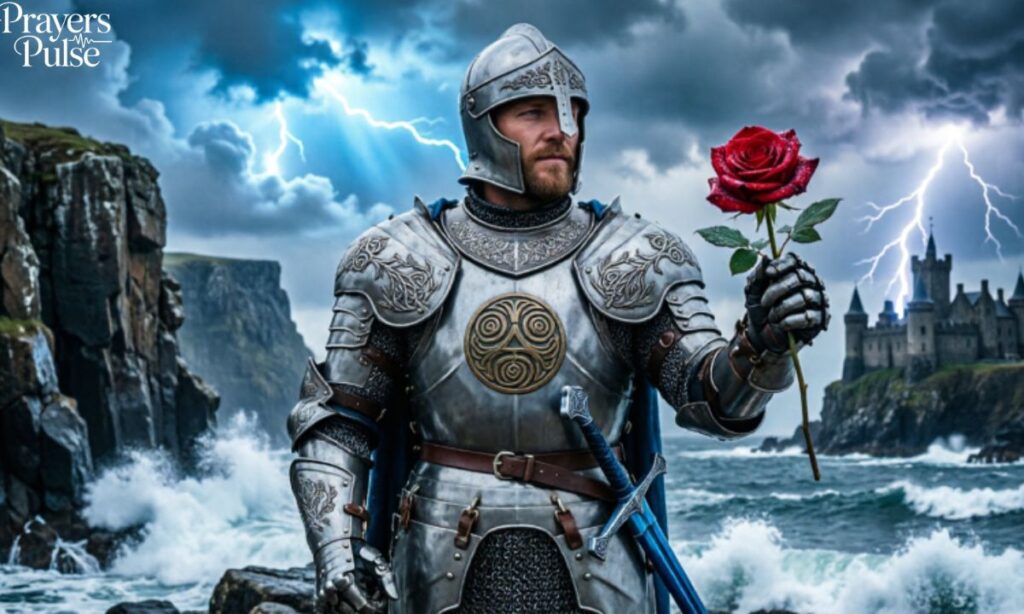
- Most names have a single straightforward meaning like “strong” or “grace” but Tristan carries layered meanings that speak to both action and emotion simultaneously.
- The combination of tumult and sorrow creates a name that feels dynamic rather than static — as though it carries a story within itself.
- Very few names in the English-speaking world carry the same balance of romantic legend, historical depth, and linguistic complexity.
- The name manages to feel both ancient and completely modern, both rugged and refined — a rare quality in any name.
- It is the kind of name that people remember hearing for the first time because it does not sound quite like anything else.
What Does the Name Tristan Mean?
The name Tristan means “full of sorrow” or “sadness,” though it is also often associated with bravery and romance from Celtic legend.
Literal Meaning of Tristan
- The most direct linguistic meaning of Tristan comes from the Pictish and Brittonic Celtic name Drustan or Drust which translates to “noise” or “tumult.”
- This root connects the name to ideas of energy, movement, and force — a name that evokes something happening rather than something still.
- The name also strongly overlaps with the Old French word triste, meaning sad or sorrowful, which influenced how the name was understood throughout medieval Europe.
- Both meanings coexist within the name and neither fully cancels the other out — making the literal meaning more layered than most name definitions provide.
- In modern dictionaries and name databases, Tristan is most commonly defined as meaning “tumult,” “noise,” or “sadness” depending on the linguistic tradition being referenced.
Symbolic and Emotional Meaning
- Symbolically, Tristan represents passion that comes with a cost — the kind of love and life that is deeply felt and never easily forgotten.
- The name evokes loyalty, intensity, longing, and a certain beautiful melancholy that resonates emotionally even with people who know nothing of its origin.
- It suggests a person who experiences life deeply — someone who does not live on the surface of things but feels everything with genuine intensity.
- Emotionally, the name carries a weight that feels romantic without being soft and strong without being cold.
- People associate the name instinctively with someone who is deeply feeling, quietly brave, and capable of profound devotion.
How the Meaning Has Evolved Over Time
- In its earliest form as Drustan among Celtic peoples, the name was used as a warrior name, emphasizing strength, noise, and battle-readiness.
- As the legend of Tristan and Isolde spread through medieval Europe, the name became saturated with romantic and tragic associations.
- By the medieval period, the French influence of triste had deeply shaped how people heard and understood the name — it became inseparable from the idea of beautiful sadness.
- In the 19th and 20th centuries, the name was revived through Romantic literature and opera, reinforcing its associations with passionate, doomed love.
- In the 21st century, the meaning has evolved again — Tristan is now perceived as sophisticated, romantic, and strong, with the sadness component fading into a kind of attractive emotional depth rather than pure sorrow.
Tristan Name Origin and History Explained
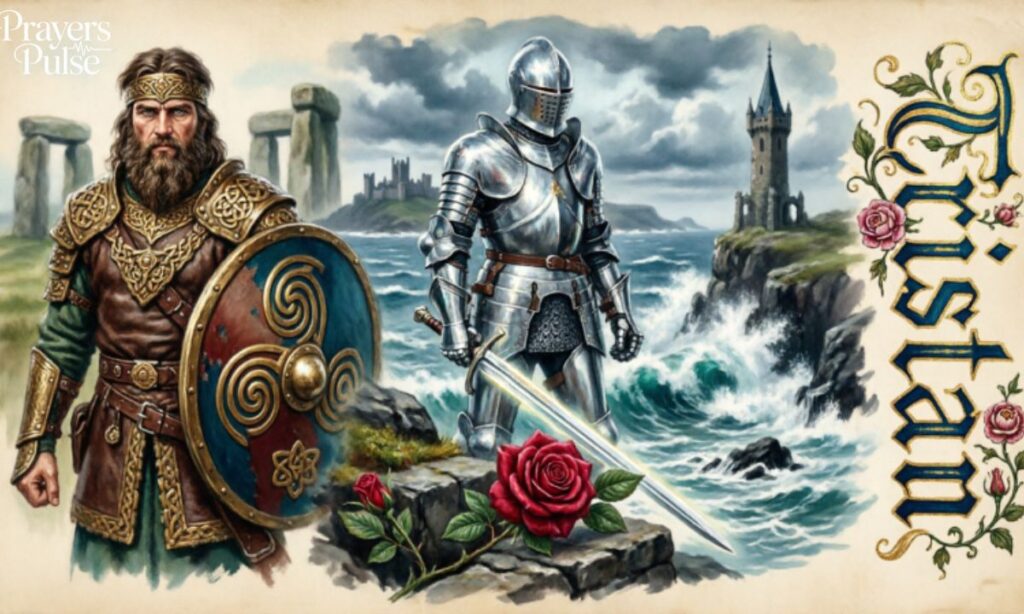
The name Tristan comes from Celtic and medieval legend, where it became widely known through the tragic romance of Tristan and Isolde.
Celtic and Welsh Roots
- The name Tristan originates most directly from ancient Celtic and Pictish cultures, where the root name Drustan or Drust was used among warriors and leaders.
- Picts were an ancient people of what is now Scotland and northeastern Britain, and the name appears in their historical records as far back as the early medieval period.
- The Welsh and Breton traditions also carry versions of the name, reflecting the broader Celtic linguistic family across the British Isles and northwestern France.
- In Welsh tradition, the name appears as Trystan, connecting it to stories from Welsh mythology and the early Arthurian tradition.
- This Celtic foundation gives Tristan genuine ancient roots that predate the romantic legend by several centuries.
The Legend of Tristan and Isolde
- The most famous and culturally influential origin of the name comes from the medieval legend of Tristan and Isolde — one of the greatest love stories in Western literary tradition.
- In the legend, Tristan is a Cornish knight who falls into an accidental but all-consuming love with the Irish princess Isolde after they share a magical love potion.
- The tragedy lies in the fact that Isolde is intended to marry Tristan’s uncle, King Mark — creating a love triangle built on loyalty, passion, and impossible choices.
- The story ends in death, with both lovers dying — Tristan from a wound and Isolde from grief — cementing the association between the name and romantic tragedy.
- This legend spread across medieval Europe through French romances, German poetry by Gottfried von Strassburg, and eventually through Tennyson and Wagner’s famous opera in the 19th century.
- The story gave the name Tristan a permanent association with passionate, all-consuming, and bittersweet love that has never fully left it.
Influence on Modern Usage
- The legend of Tristan and Isolde is directly responsible for the widespread use of the name beyond Celtic regions throughout Europe and eventually the English-speaking world.
- The name entered English usage primarily through medieval French romance literature and was strengthened by the 19th-century Romantic movement’s fascination with tragic love stories.
- Wagner’s 1865 opera Tristan und Isolde brought the name to massive cultural attention across Europe and cemented its romantic reputation in modern consciousness.
- In the 20th century, the name appeared in literature, film, and eventually became a popular baby name choice across the United States, United Kingdom, Canada, and Australia.
- Today the name is used completely independently of its legend — most parents choosing it do so for its sound, its romantic feeling, and its distinctive quality rather than its specific story.
Is Tristan a Romantic Name?
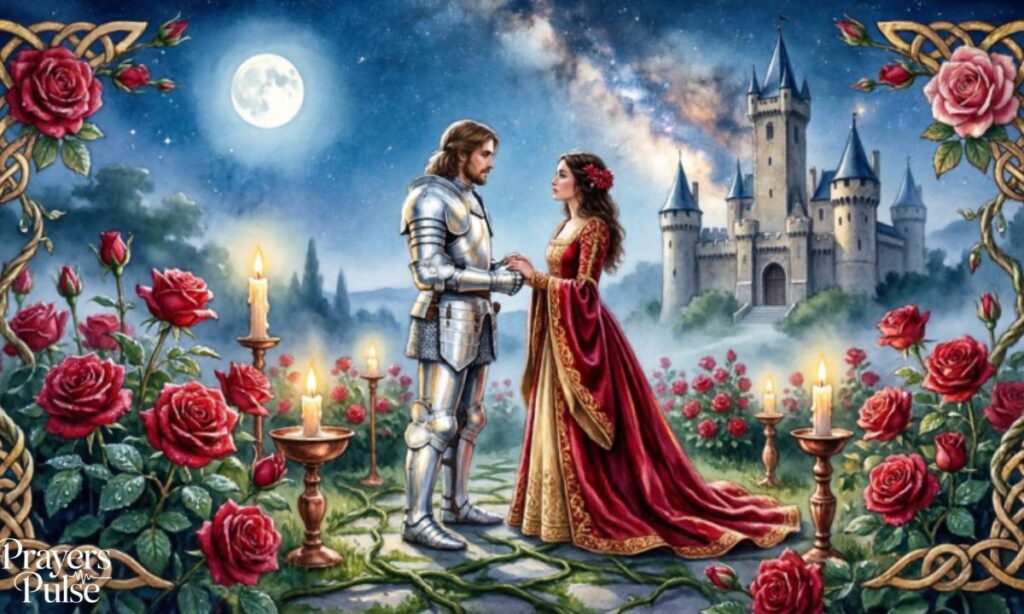
Yes, Tristan is considered a romantic name because it is linked to the legendary love story of Tristan and Isolde.
Why It Feels Romantic
- Tristan feels romantic for multiple converging reasons — its sound, its history, its meaning, and its cultural associations all work together to create a distinctly romantic impression.
- The soft consonants combined with the elegant two-syllable rhythm give it a musical quality that naturally appeals to the emotional senses.
- Its deep association with one of Western literature’s greatest love stories means the name carries an almost inherited romantic energy.
- Even people who have never heard of the legend consistently rate Tristan as one of the most romantic-sounding names in surveys about name perception.
- The slight melancholy embedded in its meaning — particularly the connection to triste — adds a depth that pure cheerful names lack.
The Emotional Energy Behind the Name
- Tristan carries an emotional energy that feels simultaneously passionate and restrained — suggesting depth beneath a composed exterior.
- It does not feel frivolous or light — there is a gravitas to the name that communicates emotional seriousness and genuine feeling.
- The name suggests someone capable of intense loyalty and deep love rather than shallow attraction or casual connection.
- This emotional energy makes the name appealing not just for babies but in fiction, film, and anywhere a character needs to feel genuinely compelling and emotionally complex.
- It is the kind of name that makes people pause slightly — there is something about it that communicates substance before anything else is known about the person.
Modern Interpretation (2026)
- In 2026, Tristan is interpreted as a name that balances vintage elegance with contemporary appeal — it feels classic without being stuffy or old-fashioned.
- Modern parents choose it for its romantic sound, its strong but not aggressive feeling, and its ability to work equally well in professional and personal contexts.
- Culturally, the name has been refreshed through appearances in popular media, giving it a current feel while retaining its historical depth.
- In 2026, the romantic quality of the name is seen as an asset rather than an excess — particularly as parents move away from purely trendy names toward ones with genuine character.
- The name reads as confident and emotionally intelligent in the modern context — two qualities increasingly valued in contemporary culture.
Tristan Meaning Personality Traits
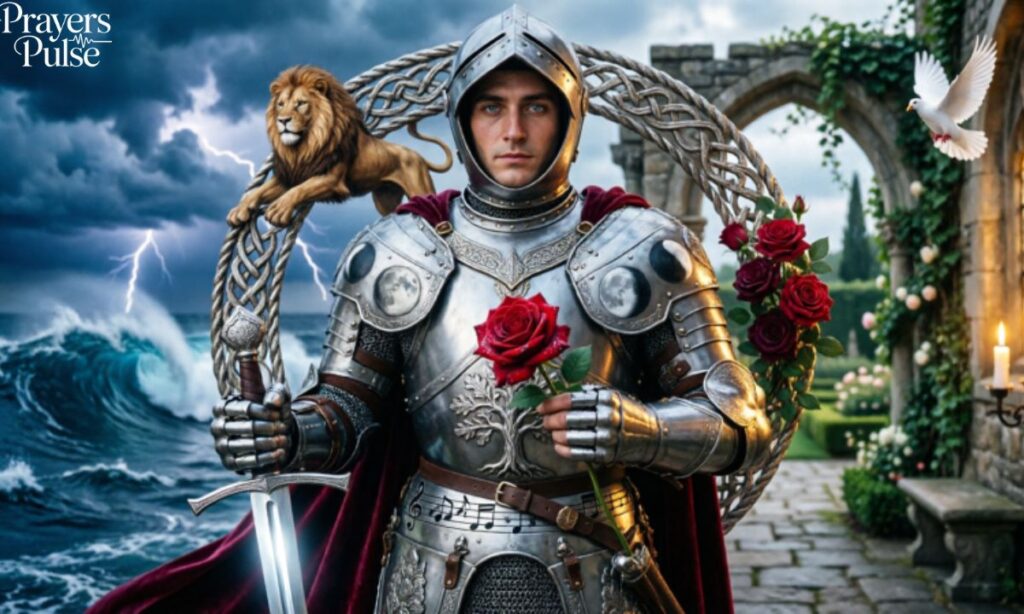
People named Tristan are often associated with sensitive, loyal, romantic, and emotionally deep personality traits, reflecting the name’s legendary roots in love and tragedy.
Common Personality Traits
- People named Tristan are commonly perceived as deep thinkers who process experiences and emotions on a level that goes beyond surface appearances.
- They tend to be intensely loyal — the kind of friends and partners who show up consistently and take their commitments with genuine seriousness.
- Tristans are often described as creative and imaginative, with a natural inclination toward art, music, storytelling, or other expressive outlets.
- They frequently carry a quiet confidence — not loud or attention-seeking but clearly self-possessed and assured in who they are.
- A sense of romanticism and idealism often runs through their character — they believe in meaningful love, important causes, and a life lived with genuine purpose.
- They tend to be sensitive without being fragile — able to feel things deeply while still possessing real emotional resilience and inner strength.
Strengths and Weaknesses
- Strengths — Deeply loyal, emotionally intelligent, creative, thoughtful, idealistic, sensitive to others, committed, and capable of extraordinary depth in relationships.
- Weaknesses — Can tend toward melancholy or overthinking, may struggle with letting go of hurt or disappointment, sometimes carries emotional weight alone rather than sharing it.
- Tristans often set very high standards for themselves and the people around them — which can be inspiring but also occasionally leads to frustration or disappointment.
- Their sensitivity, while a genuine strength in relationships, can make them more vulnerable to criticism and rejection than their composed exterior suggests.
- The same depth that makes them exceptional partners and friends can sometimes make casual or surface-level relationships feel unsatisfying and unfulfilling to them.
Social Perception of the Name
- Socially, the name Tristan creates an immediate impression of someone sophisticated, interesting, and worth knowing better.
- Studies on name perception consistently show that Tristan is rated as intelligent, creative, and trustworthy by people hearing it for the first time.
- The name carries enough distinctiveness to be memorable without being so unusual that it creates awkward social friction.
- In professional settings, Tristan reads as competent and confident — a name that does not require any additional effort to be taken seriously.
- Socially, it positions the bearer as someone with cultural awareness and depth rather than someone following the most common naming trends.
Is Tristan a Boy or Girl Name?
- Tristan is primarily and historically a masculine name — it originated as a male warrior name in Celtic culture and has been used predominantly for boys throughout its long history.
- The vast majority of people named Tristan globally are male — in the United States, approximately 85–90% of Tristans are male according to naming databases.
- However, Tristan has increasingly been used for girls over the past few decades as gender-neutral and formerly masculine names have become popular choices for daughters.
- The name’s soft sound and romantic associations make it feel accessible for girls despite its masculine origin.
- It sits in the category of names like Jordan, Avery, and Morgan — historically male but now comfortably used across genders without creating confusion.
Can Tristan Be Used for Girls?
- Yes, absolutely — Tristan is used for girls and works beautifully as a strong, distinctive, and slightly unexpected feminine name choice.
- For parents looking for a name that sounds both strong and lovely for a daughter, Tristan offers exactly that balance without being overtly masculine.
- The French connection to triste actually gives the name a somewhat feminine energy in the Romance language tradition.
- Female Tristans often report appreciating the name’s uniqueness and the way it stands out in a world of more common feminine names.
- The name is entirely usable for girls without feeling like a misfit — it has enough crossover history and sound to work naturally.
Simple Rule to Remember
- If you want a straightforward, easy-to-remember guideline — Tristan is a boy’s name that works well for girls too.
- Think of it the same way you would think of the name Ryan or Cameron — primarily male, but genuinely usable and increasingly common for females.
- The spelling Tristan is used for both genders — unlike some names that develop feminine spellings like Tristin or Tristyn.
- When in doubt, the name will be received as masculine by default — which is useful context if that matters for your decision.
How Popular Is the Name Tristan in 2026?
Popularity in the United States
- Tristan has been a consistent presence in the US top 200 baby names for boys throughout the 2000s and 2010s, reaching its peak popularity in the mid-2010s.
- In recent years, the name has settled into a comfortable and stable position in the top 100 to 150 range for boys — popular enough to be recognized but not so common as to feel overused.
- For girls, Tristan appears much lower on popularity charts, sitting outside the top 500 female names but still registering as a genuine and growing choice.
- The name experienced a notable boost in popularity following appearances in popular media and the widespread cultural moment of the Brad Pitt film Legends of the Fall in the 1990s.
- In 2026, Tristan remains a solidly popular but not saturated name — you will encounter Tristans but you will not find three of them in every classroom.
Global Popularity Trends
- In the United Kingdom, Tristan is more common than in the US in relative terms — it has strong historical and cultural roots in British naming traditions.
- France uses the name consistently as Tristan with its natural French pronunciation, keeping it connected to its Romantic language heritage.
- Canada and Australia both show strong and consistent use of the name, reflecting the broader English-speaking world’s appreciation for its sound and history.
- In Germany, the name gained significant cultural prominence through Wagner’s opera and continues to be used, often spelled the same way as in English.
- The name enjoys what naming experts call international transportability — it works and is recognized across many languages and cultures without significant adaptation.
Is Tristan Trending Up or Down?
- In 2026, Tristan is in what naming trend experts describe as a stable holding pattern — neither climbing dramatically nor declining significantly.
- It is not a name on a sharp upward trend driven by a recent viral cultural moment, but it is also not experiencing the kind of overexposure that causes names to fall sharply.
- Names like Tristan tend to have longer staying power than trend-driven names precisely because they are chosen for their meaning and character rather than pure trendiness.
- Some naming analysts predict a modest uptick as parents continue to move away from extremely common names toward ones with more historical depth and distinctiveness.
- The overall trajectory suggests Tristan will remain a reliably good choice that neither becomes the most popular name of a generation nor disappears into obscurity.
How Rare Is the Name Tristan?

- Tristan is not a rare name in any strict sense — it is a known, recognized, and regularly used name in all major English-speaking countries.
- However, it is also not so common that you will encounter large numbers of Tristans in any given school, workplace, or social circle.
- The honest answer is that Tristan sits in a sweet spot of recognition without saturation — people know the name immediately but do not feel they have heard it too many times.
- In the context of the thousands of names parents consider, Tristan is best described as moderately common with distinctive character rather than either rare or ubiquitous.
- For parents who want a name that feels special without being unusual to the point of creating constant spelling and pronunciation challenges, this level of rarity is genuinely ideal.
What This Means in Real Life
- A child named Tristan in 2026 will very likely be the only Tristan in their class or grade for most of their school years.
- They will almost never have to go by “Tristan L.” to distinguish themselves from another Tristan — a significant practical quality-of-life advantage over more common names.
- The name is well-known enough that teachers, coaches, and new acquaintances will pronounce and spell it correctly without hesitation on the first try.
- A Tristan will never have to explain their name, repeat it multiple times, or accept a common mispronunciation as the only practical option.
- Professionally, the name is distinctive enough to stand out on a resume while being familiar enough to inspire immediate confidence rather than confusion.
Names Similar to Tristan (Comparison Guide)
Names Similar to Tristan (Comparison Guide): If you like Tristan, you may also enjoy names like Trenton, Trevor, Tristano, Christian, and Troy, which share a similar strong, classic, and timeless appeal.
Comparison Table
- Tristan vs. Tristian — Tristian is simply an alternate spelling that some parents choose for uniqueness but Tristan is the traditional and more widely recognized spelling.
- Tristan vs. Trenton — Both start with “Tr” and have a strong masculine energy but Trenton is more place-name inspired while Tristan has deeper romantic and literary roots.
- Tristan vs. Sebastian — Both are romantic, multi-syllable names with strong European heritage and literary associations — Sebastian has slightly more widespread usage currently.
- Tristan vs. Dorian — Both carry a literary, slightly melancholy romantic quality — Dorian is connected to Oscar Wilde while Tristan connects to the Celtic legend.
- Tristan vs. Damian — Both have a strong sound and historical depth but Damian carries darker, more ominous cultural associations while Tristan leans toward the romantic.
- Tristan vs. Adrian — Both are elegant, cross-cultural names with ancient roots — Adrian is slightly more international and widely used while Tristan feels more specifically romantic.
- Tristan vs. Rowan — Both have Celtic roots and a modern appeal — Rowan has become more gender-neutral while Tristan retains a stronger masculine identity overall.
What Makes Tristan Stand Out?
- Unlike most similar names, Tristan carries the unique combination of genuine legendary status, linguistic beauty, and emotional depth all in one package.
- No other name in its comparison group has the same direct connection to one of literature’s greatest love stories — that narrative heritage is exclusive to Tristan.
- The name manages to feel simultaneously ancient and completely contemporary in a way that most similar names achieve only partially.
- Its slight melancholy edge gives it an emotional complexity that purely strong or purely cheerful similar names lack entirely.
- Tristan simply has more layers of meaning, history, and cultural resonance than almost any comparable name — and that depth is genuinely rare and valuable.
Middle Names That Go Well With Tristan

Middle Names That Go Well With Tristan: Popular combinations include Tristan James, Tristan Alexander, Tristan Michael, Tristan Elijah, and Tristan Gabriel, offering a balanced blend of strength, elegance, and timeless charm.
Classic Combinations
- Tristan James — Clean, strong, and timeless — James balances Tristan’s romanticism with solid, dependable simplicity.
- Tristan Alexander — Both names carry European history and elegance, creating a combination that feels substantial and distinguished.
- Tristan William — A royal, classic pairing that grounds the romantic energy of Tristan with the steady reliability of William.
- Tristan Michael — A popular and effective pairing — Michael’s familiarity provides a solid anchor for the more distinctive Tristan.
- Tristan Edward — Regal and composed, this combination suggests confidence, tradition, and a quietly impressive character.
- Tristan Robert — Classic and grounded — Robert’s simplicity balances Tristan’s more elaborate first-syllable energy beautifully.
Modern and Unique Pairings
- Tristan Cole — Short, punchy, and modern — Cole provides a crisp contrast to the flowing quality of Tristan.
- Tristan Finn — Both have Celtic roots making this a thematically cohesive and pleasantly rhythmic combination.
- Tristan Eli — The short two-syllable Eli creates a lovely rhythmic contrast and a softer, more intimate feel.
- Tristan Luca — An international pairing with a warm, Mediterranean quality that feels effortlessly modern and stylish.
- Tristan Orion — Bold, mythological, and memorable — both names carry legendary associations that work well together.
- Tristan Jude — Short, strong, and slightly poetic — Jude brings a cool literary quality that complements Tristan perfectly.
- Tristan Zane — A modern edge with a classic first name — the contrast creates something genuinely distinctive and memorable.
Simple Tip
- The best middle names for Tristan tend to be either one syllable or three syllables — this creates the most pleasing rhythmic balance when the names are said aloud together.
- Avoid middle names that also end in “-an” or “-in” sounds as they can blur together when spoken quickly — Tristan Dylan or Tristan Brendan can sound repetitive.
- Say the full name combination out loud at least ten times before deciding — how it sounds in everyday speech matters more than how it looks on paper.
Is Tristan a Good Name for a Baby? (Decision Guide)
Is Tristan a Good Name for a Baby? (Decision Guide): Tristan is a great baby name choice because it combines a rich historical background, a strong yet gentle sound, and timeless appeal that suits both childhood and adulthood.
Pros and Cons of the Name Tristan
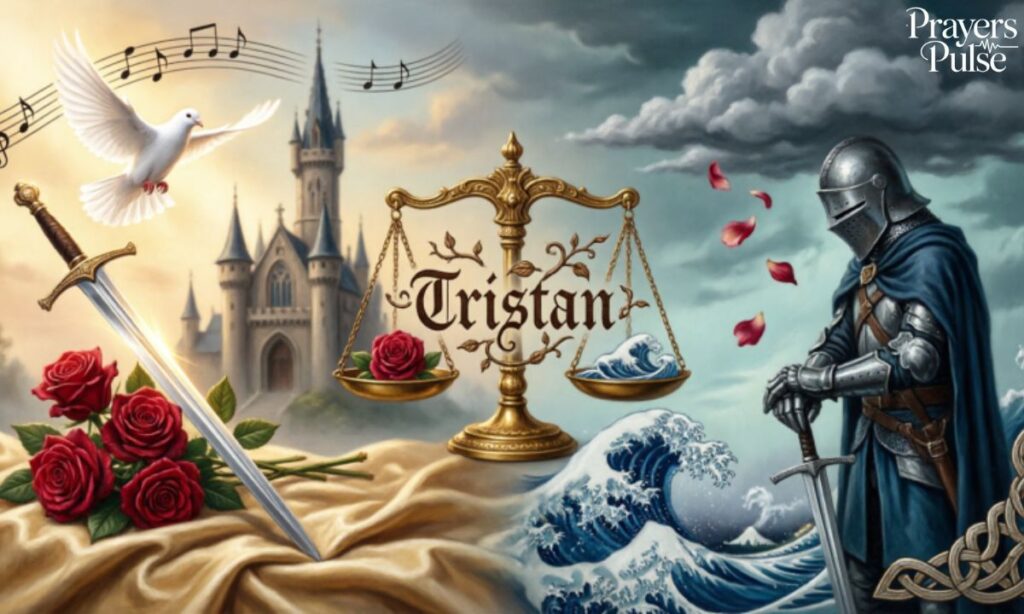
- Pros — Beautiful sound, rich history, strong but not harsh, romantic without being weak, internationally recognized, unlikely to be shared with classmates, works across professional and personal contexts, ages extremely well from childhood to adulthood.
- Cons — The connection to tragedy and sorrow may feel heavy to some parents, the legend association means some people will always think of the romantic story, and some may find the name slightly more formal than they want for everyday use.
- The pros significantly outweigh the cons for most parents — the cons are minor and primarily a matter of personal preference rather than genuine practical concerns.
Who Should Choose This Name?
- Parents who value names with genuine historical depth and cultural heritage rather than names that simply sound appealing in the moment.
- Anyone who appreciates romantic, literary, and musical associations and sees those as positive qualities rather than excessive ones.
- Parents looking for a name that is distinctive without being unusual — noticed and remembered but never burdensome to carry.
- Those who want a name that will age gracefully from a child to a teenager to a professional adult without ever feeling out of place.
- Parents of any cultural background — Tristan works across ethnicities, nationalities, and family traditions without cultural friction.
Who Might Want Alternatives?
- Parents who specifically want a name with clear, straightforward positive meaning might find Tristan’s sorrow association uncomfortable.
- Those who prefer names that are completely unambiguous in gender might look elsewhere if they want a name that signals male identity without any possibility of confusion.
- Parents who want something extremely rare and completely off the charts might find Tristan too well-known for their purposes.
- Families with very simple, short last names might find that a shorter first name creates a better overall rhythm than the two-syllable Tristan.
Tristan Meaning in the Bible (Myth vs Reality)
Tristan Meaning in the Bible (Myth vs Reality): Tristan is not a biblical name and does not appear in the Bible; it originates from Celtic and medieval legends, though some people associate its themes of loyalty and courage with biblical values.
Why the Confusion?
- Many people search for Tristan’s biblical meaning expecting to find the name in Scripture, but Tristan does not appear anywhere in the Bible — Old or New Testament.
- The confusion arises because many parents today choose names with spiritual meaning and assume that an old, historically significant name like Tristan must have biblical roots.
- The name’s age and its association with concepts like loyalty, love, and sacrifice — which are deeply biblical themes — may also contribute to the assumption of a biblical connection.
- Some websites inaccurately list Tristan as having Hebrew or biblical origins, which has spread misinformation that people reasonably encounter in name research.
- The reality is that Tristan is Celtic and medieval European in origin, not Semitic or biblical — it belongs to an entirely different linguistic and cultural tradition.
Spiritual Interpretation
- While Tristan has no biblical origin, some believers assign spiritual meaning to the name by interpreting its themes through a faith lens.
- The themes embedded in the legend — sacrificial love, loyalty unto death, and love that transcends earthly circumstances — do resonate with Christian spiritual values.
- Some Christian parents choose Tristan specifically because they see in its story a reflection of the kind of devoted, self-giving love described in Scripture.
- The meaning of “noise” or “tumult” could be spiritually interpreted as representing the boldness and passionate proclamation of faith.
- Ultimately, the name carries no inherent spiritual or biblical meaning but its themes can be given spiritual significance by families who choose to see it that way.
Famous People Named Tristan
- Tristan Thompson — Canadian NBA basketball player, most widely known for his career with the Cleveland Cavaliers and his personal life, bringing the name significant mainstream visibility.
- Tristan Tzara — Romanian-French avant-garde poet and performance artist who was one of the founders of the Dada movement in the early 20th century.
- Tristan MacManus — Irish professional dancer best known for his appearances on Dancing with the Stars, bringing the name into mainstream American entertainment.
- Tristan Rogers — Australian-American actor famous for his long-running role as Robert Scorpio on the soap opera General Hospital.
- Tristan de Cunha — Portuguese explorer after whom the remote South Atlantic island group Tristan da Cunha is named, reflecting the name’s historical reach.
- Tristan — A character in the beloved BBC series All Creatures Great and Small, helping the name maintain warm, positive cultural associations in British tradition.
- Tristan Prettyman — American singer-songwriter, demonstrating the name’s crossover use for women in professional and artistic contexts.
- Tristan und Isolde — While fictional, the operatic character created by Richard Wagner is arguably the most culturally significant Tristan in the Western artistic tradition.
Quick Quiz: Is Tristan the Right Name for You?
- Do you love names with deep historical roots? — If yes, Tristan scores perfectly. If you prefer modern invented names, it may not feel right.
- Are you drawn to romantic and literary associations? — If yes, Tristan is essentially made for you. If those associations feel heavy, consider something lighter.
- Do you want a name that is recognizable but not overused? — If yes, Tristan hits that sweet spot better than almost any comparable name.
- Are you comfortable with a name that has a slight air of sadness in its meaning? — If yes, Tristan’s depth will feel like a feature. If not, its etymology might bother you.
- Do you want a name that ages well from childhood to professional adulthood? — If yes, Tristan is exceptional in this regard across every life stage.
- Are you looking for easy international usability? — If yes, Tristan works across languages and cultures with minimal friction.
- If most of your answers were yes — Tristan is very likely an excellent choice for your child and you should feel confident about it.
Nicknames and Short Forms for Tristan
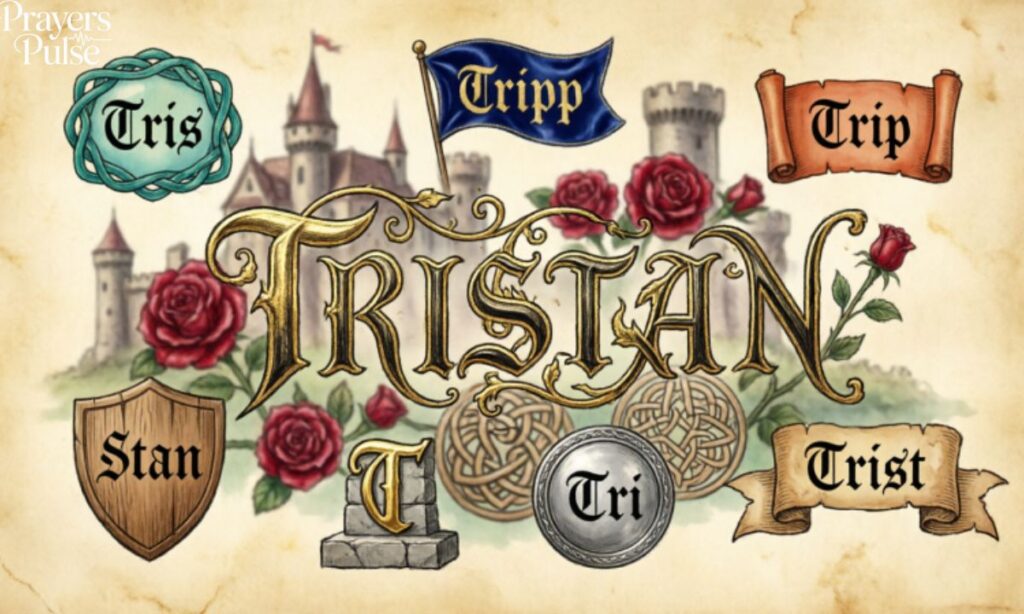
Nicknames and Short Forms for Tristan: Common nicknames for Tristan include Tris, Tristy, T, Triz, Stan, and Trey, offering playful, modern, and affectionate options for everyday use.
Popular Tristan Nicknames
- Tris — The most natural and widely used nickname, clean and friendly while retaining the distinctive character of the full name.
- Tan — A short, casual option drawn from the second syllable, works well in relaxed and informal settings.
- T — Simple, cool, and modern — works particularly well for teenagers who want something ultra-casual among friends.
- Trist — Slightly unusual but keeps more of the original name’s sound and feel than most shortened versions.
Cute and Creative Variations
- Triss — A softer, slightly more playful variation of Tris, occasionally used for female Tristans as well.
- Ristan — Unusual but occasionally used, dropping the initial T creates something that feels almost like a different name.
- Stan — An unexpected but workable nickname pulled from the second part of the name, more commonly used as an independent name.
- Trizzy — A very casual, playful nickname more common among young children or in particularly informal contexts.
- Tristi — A cute, slightly Italianate variation that works sweetly for young children before they grow into the full name.
Choosing the Best Nickname
- The best nickname for Tristan depends entirely on personality — the name Tris suits almost everyone and is the default natural choice.
- For a more casual, laid-back personality, T works effortlessly in everyday social settings.
- For someone who prefers to go by their full name, Tristan is short enough at two syllables that nicknaming is entirely optional rather than necessary.
- Many Tristans simply go by their full name throughout their lives — the name is short enough to never feel burdensome in everyday use.
Numerology and Spiritual Meaning of Tristan
Numerology and Spiritual Meaning of Tristan: In numerology, Tristan is often associated with qualities such as creativity, intuition, independence, and inner strength, while its spiritual symbolism is linked to loyalty, courage, personal growth, and the pursuit of meaningful relationships.
Numerology Number Associated With Tristan
- Using the standard Pythagorean numerology system where each letter is assigned a number, Tristan calculates to the number 7.
- The number 7 in numerology is associated with wisdom, introspection, spiritual depth, and the search for deeper truth beyond surface appearances.
- Seven is considered one of the most spiritually significant numbers in numerology, connected to inner knowledge and a natural orientation toward meaning and purpose.
- This numerological association aligns remarkably well with the emotional and intellectual depth most people intuitively associate with the name Tristan.
- Number 7 personalities are typically described as analytical, thoughtful, private, and deeply perceptive — traits that resonate strongly with the name’s overall character.
Spiritual Symbolism of the Name
- The spiritual symbolism of Tristan combines its numerological energy with its legendary and linguistic heritage to create a name associated with deep seeking and profound experience.
- The connection to the number 7 suggests a person oriented toward spiritual questions, inner wisdom, and the pursuit of authentic meaning rather than superficial success.
- The sadness embedded in the name’s meaning can be spiritually interpreted as sensitivity to the deeper truths of existence — a necessary quality in all genuine seekers.
- The name’s warrior origins represent spiritual courage — the willingness to face difficult truths and navigate challenging inner and outer landscapes.
- Together, the spiritual associations of Tristan suggest a soul that experiences life intensely, seeks meaning persistently, and approaches the world with genuine depth and awareness.
What Numerology Says About Personality
- A number 7 Tristan is likely to be intellectually curious, naturally introspective, and drawn to questions that have no easy answers.
- They often need significant solitude and quiet time to recharge and process their experiences — not antisocial but deeply in need of inner space.
- Sevens are frequently drawn to philosophy, spirituality, science, art, or any field that involves probing beneath the surface of what is immediately visible.
- They can struggle with vulnerability and emotional openness — their depth is genuine but sharing it with others does not always come easily or naturally.
- In relationships, number 7 personalities are intensely loyal and deeply loving but may need a partner patient enough to earn the full depth of their trust over time.
Tristan Name Across Different Cultures
Tristan Name Across Different Cultures: Tristan is recognized across many cultures, particularly in Celtic, French, English, and Spanish-speaking regions, where it is admired for its legendary roots, romantic associations, and timeless international appeal.
Pronunciation Around the World
- In English-speaking countries, Tristan is pronounced TRIS-tan with the emphasis on the first syllable — clean, clear, and immediately recognizable.
- In French, the pronunciation is similar but slightly softer and more flowing — Trees-TAHN — with a nasal quality on the final syllable typical of French phonology.
- In German, the name is pronounced TRIS-tahn — very close to the English pronunciation but with slightly harder consonants.
- In Spanish-speaking countries, the name is typically pronounced Trees-TAHN similar to the French, reflecting the Romance language phonetic patterns.
- In Portuguese, the pronunciation follows a similar Romance pattern and the name appears as both Tristan and Tristão in Brazilian and Portuguese usage.
- In Welsh, where the name has ancient roots as Trystan, it is pronounced TRUH-stan with the Welsh Y vowel sound that does not exist in English.
Cultural Variations and Adaptations
- Tristão — Portuguese variation used in Brazil and Portugal, maintaining the name’s elegance while adapting to Portuguese phonetic conventions.
- Trystan — Welsh variation that represents the original Celtic spelling and is used by Welsh families wanting to honor the name’s genuine linguistic heritage.
- Tristen / Tristin / Tristyn — English spelling variations that emerged in American naming culture, particularly when the name is used for girls.
- Dristan — The most ancient form of the name from Pictish tradition, rarely used today but historically significant as the true original root.
- Tristano — Italian variation that gives the name a warm Mediterranean quality while maintaining its core identity and recognizability.
International Appeal of Tristan
- Tristan is one of a select group of names that functions effectively across linguistic families — it works in Germanic, Romance, and Celtic language contexts without significant friction.
- This international transportability makes it an excellent choice for families with multicultural backgrounds or international connections.
- The name’s association with a legend known across European culture gives it a shared cultural reference point that most names simply do not possess.
- In an increasingly globalized world, a name that travels well across languages and cultures is a genuinely practical asset as well as an aesthetic one.
- Parents raising children in multilingual households or internationally mobile families consistently find that Tristan holds up well across every cultural context they encounter.
What Does the Name Tristan Say About First Impressions?
What Does the Name Tristan Say About First Impressions? The name Tristan often creates a first impression of someone who is confident, intelligent, charming, and compassionate, with a balance of strength and sensitivity that feels both approachable and memorable.
How Others Perceive the Name
- Research on name perception consistently shows that Tristan creates an impression of intelligence, creativity, and emotional depth before anyone has met the person.
- People hearing the name for the first time tend to imagine someone thoughtful, interesting, and worth getting to know — a genuinely positive initial association.
- The name does not trigger the same immediate assumptions about toughness as names like Maximus or the same immediate gentleness as names like Oliver — it sits in a more nuanced middle space.
- Most people find the name immediately appealing on first hearing — it has an aesthetic quality that generates positive responses across age groups and demographics.
- The romantic associations of the name mean that people often unconsciously project qualities of loyalty, passion, and depth onto someone named Tristan before any personal interaction occurs.
Professional and Personal Image
- Professionally, Tristan projects an image of competence, sophistication, and creative intelligence — it is a name that performs well in both creative fields and traditional professions.
- In professional contexts, the name is distinctive enough to be remembered from a resume, email signature, or business card without being unusual enough to create doubt.
- In personal life, Tristan creates an image of someone worth knowing on a deeper level — the name signals that there is more beneath the surface than immediately apparent.
- The name ages professionally with exceptional grace — it sounds equally appropriate for a creative professional, a doctor, a lawyer, an artist, or an entrepreneur.
- There is no career field or social context in which Tristan sounds out of place or creates a poor impression — its versatility is one of its strongest practical qualities.
Lasting Impression and Reputation
- Names that create strong first impressions do not always sustain them — but Tristan’s depth means the name continues to feel appropriate as people get to know the person behind it.
- The complexity of the name’s meaning and history means it tends to grow on people over time rather than wearing out its welcome.
- People who know Tristan often report that the name suits the person remarkably well — perhaps because its depth and complexity attract people of similar character.
- The lasting impression the name creates is of someone genuine, layered, and memorable — qualities that serve a person well in every area of life.
- Ultimately, Tristan leaves the kind of impression that makes people remember both the name and the person long after the initial encounter has passed.
Fun Facts About the Name Tristan
Fun Facts About the Name Tristan: Tristan is famous for its connection to the legendary tale of Tristan and Isolde, has been popular in many countries for decades, and is loved for its blend of romantic history, modern style, and timeless charm.
Interesting Historical Facts
- The name Tristan appears in historical records as early as the 6th century AD among Pictish royalty in what is now Scotland — making it over 1,500 years old.
- A real historical figure named Drustan was a Pictish king whose existence may have inspired or merged with the legendary Tristan of the romantic tales.
- The name spread across Europe during the 12th and 13th centuries primarily through the explosion of courtly romance literature in France and the Anglo-Norman tradition.
- Wagner’s opera Tristan und Isolde premiered in 1865 and is considered one of the most harmonically revolutionary pieces of music ever composed — the so-called Tristan chord changed the course of Western music entirely.
- The island group Tristan da Cunha in the South Atlantic — the most remote inhabited island on Earth — was named after Portuguese explorer Tristão da Cunha who discovered it in 1506.
Tristan in Literature and Popular Culture
- The 1995 film Legends of the Fall starring Brad Pitt featured a character named Tristan Ludlow whose brooding, passionate, and tragic character dramatically boosted the name’s popularity in the United States.
- Tristan is a significant character in the BBC’s beloved All Creatures Great and Small series — a charming, witty veterinarian whose warmth made the name beloved across British audiences.
- The name appears in numerous Young Adult novels, fantasy series, and romantic fiction — consistently used for characters meant to be deeply feeling, loyal, and romantically compelling.
- In the TV series Gilmore Girls, a character named Tristan appears as a sophisticated, slightly mysterious love interest — reinforcing the name’s romantic associations for a whole generation of viewers.
- The legendary story of Tristan and Isolde has been retold in film, including the 2006 movie Tristan + Isolde, keeping the name’s legendary associations alive for contemporary audiences.
Surprising Facts You May Not Know
- The so-called “Tristan chord” in Wagner’s opera — a famous unresolved harmony in the opening bars — is one of the most analyzed and discussed musical moments in the entire history of classical music.
- Tristan da Cunha, the island named after the explorer who shares the name, has a population of only about 250 people and is located 2,400 kilometers from the nearest inhabited land.
- The name Tristan was virtually unused in the United States before the 1970s — its modern American popularity is entirely a late 20th-century phenomenon.
- In medieval Europe, the story of Tristan and Isolde was as famous and as widely known as the story of Romeo and Juliet is today — it was the romantic legend of its age.
- Despite its very old age, Tristan has never been the single most popular name in any English-speaking country in any recorded year — it has always been distinctive rather than dominant, which is part of its enduring appeal.
Frequently asked questions
What Is the Meaning of the Name Tristan?
The name Tristan is commonly associated with sorrow, courage, and noble character.
What Is the Origin of the Name Tristan?
Tristan has Celtic and Welsh roots and is best known from medieval legends.
Does Tristan Mean “Sad” or “Sorrowful”?
Some interpretations connect Tristan to the Latin word tristis, meaning “sad” or “sorrowful.”
Is Tristan a Popular Baby Name?
Yes, Tristan has remained a popular choice in many English-speaking countries for decades.
Is Tristan a Boy’s Name or a Girl’s Name?
Tristan is traditionally a masculine name, though it is occasionally used for girls.
What Is the Biblical Meaning of Tristan?
Tristan does not have a direct biblical meaning because it is not a name found in the Bible.
What Personality Traits Are Associated With Tristan?
People often associate Tristan with bravery, loyalty, intelligence, and charisma.
Why Is the Name Tristan Famous?
It became famous through the legendary tale of Tristan and Isolde, a classic medieval romance.
Are There Variations of the Name Tristan?
Yes, common variations include Tristen, Tristin, and Tristram.
Why Do Parents Choose the Name Tristan?
Many parents love Tristan for its strong history, timeless appeal, and meaningful symbolism.
Conclusion
Tristan Meaning: The Hidden Story Behind This Timeless Name reveals a name rich in history, symbolism, and enduring appeal. Often associated with strength, loyalty, romance, and noble character, Tristan has captivated generations through legend and cultural significance. Its timeless charm continues to make it a meaningful choice for many families.
Ultimately, Tristan Meaning: The Hidden Story Behind This Timeless Name highlights how a name can carry deep emotional and historical value beyond its simple pronunciation. Its blend of tradition, mystery, and elegance has allowed it to remain popular across different eras. This makes Tristan a distinctive and memorable name with a legacy that continues to inspire.

Denzel is a passionate faith writer with four years of experience in prayer and Bible blogging. He now contributes has expertise to PrayersPulse.com, creating inspiring content that strengthens prayer life and deepens understanding of Scripture.