

Bible Verses About Self-Control: Strengthening Discipline Through God’s Word reveal how God equips believers with the strength to overcome temptation and live according to His will. Self-control is a vital part of Christian character, helping us make wise decisions and remain faithful in every area of life. Through prayer and Scripture, believers can develop greater discipline and spiritual maturity.
The Bible teaches that true self-control comes from a close relationship with God rather than relying solely on personal determination. As Christians meditate on God’s Word and follow the guidance of the Holy Spirit, they gain the ability to manage their emotions, desires, and actions. These powerful verses remind us that with God’s help, we can grow in discipline, obedience, and lasting faith.
What Does the Bible Mean by Self-Control?
In the Bible, self-control means the God-given ability to govern your thoughts, desires, and actions so you live in obedience to Him rather than being led by temptation.
It is seen as a fruit of the Holy Spirit that helps believers grow in discipline, wisdom, and spiritual maturity.
Self-Control Is a Spiritual Strength, Not Just Willpower

- The Bible does not see self-control as gritting your teeth and forcing yourself to behave.
- It is described as a fruit produced by the Holy Spirit working inside a believer’s life.
- This means self-control grows from your relationship with God, not from sheer human effort alone.
- Willpower runs out, but spiritual strength is renewed daily through faith and dependence on God.
- True self-control flows from a changed heart, not just a determined mind.
Why Self-Control Matters in Christian Living
- Self-control protects your witness as a Christian and keeps your actions aligned with your beliefs.
- Without it, even good intentions can collapse under pressure, temptation, or emotion.
- It allows you to make decisions based on truth rather than impulse or momentary feelings.
- Self-control is often the difference between a moment of failure and a moment of faithfulness.
- It is essential for healthy relationships, sound decisions, and a life that honors God consistently.
The Connection Between Self-Control and Freedom
- Many people think self-control is restrictive, but the Bible presents it as the opposite — true freedom.
- Without self-control, people become enslaved to habits, addictions, anger, or impulsive desires.
- Self-control breaks the cycle of being controlled by cravings, emotions, or circumstances.
- It allows you to choose your actions instead of being dragged along by your urges.
- Real freedom is not doing whatever you want — it is having the power to do what is right.
Key Bible Verses That Define Self-Control

Self-control in the Bible is the Spirit-given strength to resist temptation and live in obedience to God (Galatians 5:22–23).
Self-Control Protects Your Life (Proverbs 25:28)
- This verse compares a person without self-control to a city with broken-down walls.
- In ancient times, walls protected a city from enemies, attacks, and total destruction.
- Without self-control, a person is left exposed and vulnerable to every kind of temptation and trouble.
- Self-control acts like a spiritual wall that guards your heart, mind, and decisions.
- Building this discipline is like reinforcing the protective walls around your entire life.
God Always Provides a Way Out of Temptation (1 Corinthians 10:13)
- This verse promises that no temptation you face is unique to you alone — it is common to everyone.
- God is described as faithful, and He will not let you be tempted beyond what you can bear.
- Importantly, He always provides a way of escape so you are able to endure it.
- This means self-control is never about facing temptation alone or without help.
- It encourages believers to actively look for and take the escape route God provides.
Self-Control as a Fruit of the Spirit (Galatians 5:22–23)
- Self-control is listed as the final fruit of the Spirit, alongside love, joy, peace, and patience.
- Being listed last does not make it less important — it is often the fruit that holds the others together.
- This fruit is produced naturally as a believer grows closer to God and walks by the Spirit.
- It cannot be manufactured through pure effort; it is cultivated through spiritual growth over time.
- The presence of self-control in your life is evidence of the Spirit actively working within you.
Power, Love, and Self-Discipline (2 Timothy 1:7)
- This verse reminds believers that God did not give them a spirit of fear, but of power, love, and self-discipline.
- Fear and self-control are often presented as opposites in Scripture.
- A fearful, anxious mind often struggles to make wise, controlled decisions.
- Self-discipline is tied directly to confidence and security found in God, not in personal strength alone.
- This verse is often used to combat anxiety while reinforcing a disciplined, sound mind.
Growing in Self-Control Step by Step (2 Peter 1:5–7)
- This passage lists a progression of spiritual qualities believers are encouraged to build one upon another.
- Self-control is placed right after knowledge, showing that understanding alone is not enough.
- Knowing what is right must be followed by the discipline to actually live it out.
- The passage presents spiritual growth as intentional, step-by-step, and built with effort over time.
- Self-control is shown as a building block toward deeper qualities like perseverance, godliness, and love.
Bible Verses About Self-Control in Daily Christian Living

The Bible teaches that self-control is essential for daily Christian living, helping believers make wise choices, resist temptation, and honor God in their thoughts, words, and actions. Through the Holy Spirit’s guidance, Christians can develop the discipline needed to live faithfully each day.
Self-Control Is Greater Than Physical Strength (Proverbs 16:32)
- This verse states that a person slow to anger is better than a mighty warrior.
- It also says ruling one’s own spirit is greater than capturing an entire city.
- This places internal discipline above external power, conquest, and physical achievement.
- Real strength, according to Scripture, is measured by mastery over your own reactions and emotions.
- Self-control is positioned as a higher form of victory than any physical or military accomplishment.
Training the Body and Mind (1 Corinthians 9:24–27)
- Paul compares the Christian life to an athlete training intensely for a race or competition.
- Athletes practice strict self-control in every area to obtain a temporary prize or trophy.
- Believers are called to pursue self-discipline for something eternal rather than something fading.
- Paul even describes disciplining his own body so he does not become disqualified after preaching to others.
- This passage frames self-control as intentional training, not something that happens by accident.
Staying Spiritually Alert (1 Peter 4:7)
- Peter urges believers to be clear-minded and self-controlled so they can pray effectively.
- This connects self-control directly to a believer’s spiritual focus and prayer life.
- A cluttered, undisciplined mind makes it difficult to stay spiritually alert and attentive to God.
- Self-control here is tied to mental clarity and readiness rather than just behavior alone.
- It encourages believers to live with intention, especially as they anticipate what is still to come.
Living With Balance and Wisdom (Titus 2:11–14)
- This passage teaches that God’s grace trains believers to say no to ungodliness and worldly passions.
- It calls for living self-controlled, upright, and godly lives in the present age.
- Grace is shown as the teacher that shapes self-discipline, not a license for careless living.
- Self-control is described as part of waiting expectantly for Christ’s return.
- It balances grace and discipline together rather than treating them as opposites.
Self-Control Over Thoughts, Desires and the Mind

Biblical self-control begins in the mind, where believers are called to guard their thoughts, resist sinful desires, and focus on what is true and pleasing to God. By renewing the mind through Scripture and prayer, Christians can develop the discipline needed to live according to God’s will.
Renewing the Mind Daily (Romans 12:1–2)
- Paul urges believers not to conform to the patterns of this world but to be transformed.
- This transformation happens through the renewing of the mind, not through external rule-following.
- Self-control over thoughts starts with what you allow to shape and influence your mindset daily.
- A renewed mind is better equipped to recognize and follow God’s good and perfect will.
- This passage shows that self-control begins internally before it is ever expressed externally.
Guarding What You Think About (Philippians 4:8)
- This verse gives a clear filter for thought life — whatever is true, noble, right, pure, lovely, and admirable.
- Believers are instructed to intentionally think about these kinds of things.
- What you allow into your mind repeatedly shapes your emotions, attitudes, and eventual actions.
- Self-control over thoughts is presented as a daily, active choice rather than a passive process.
- Guarding your thought life is treated as foundational to guarding your behavior.
Controlling Desires and Impulses (Galatians 5:16–17)
- Paul describes an ongoing internal conflict between the flesh and the Spirit.
- These two forces are described as being in direct opposition to one another.
- Walking by the Spirit is presented as the way to avoid gratifying the desires of the flesh.
- This shows that controlling impulses is not a one-time decision but a continual, daily walk.
- Self-control is a byproduct of consistently choosing to walk in step with the Spirit.
Bible Verses About Self-Control in Speech and Anger

The Bible teaches that self-control is especially important in how we speak and respond to anger. By controlling our words and emotions, we reflect God’s wisdom, avoid unnecessary conflict, and build stronger relationships with others.
The Power of Words (Proverbs 18:21)
- This verse states plainly that the tongue has the power of life and death.
- Words are never described as neutral — they build up or they tear down.
- Self-control over speech is treated with the same seriousness as control over actions.
- What flows out of the mouth often reveals what is truly happening in the heart.
- This verse calls believers to weigh their words carefully before speaking them.
Being Slow to Speak (James 1:19–20)
- James instructs believers to be quick to listen, slow to speak, and slow to become angry.
- This order matters — listening is placed before speaking and reacting.
- Human anger, the passage notes, does not produce the righteousness that God desires.
- Self-control in speech often starts with the discipline of pausing before responding.
- This verse encourages restraint as wisdom rather than weakness.
Emotional Wisdom (Proverbs 29:11)
- This verse contrasts a fool who gives full vent to anger with the wise who quietly hold it back.
- Expressing every emotion without restraint is shown as foolishness, not authenticity.
- Wisdom involves discernment about when and how to express what you feel.
- Holding back is not suppression — it is intentional, thoughtful self-management.
- This verse encourages emotional maturity over impulsive emotional reactions.
Righteous Anger With Boundaries (Ephesians 4:26)
- Paul writes “in your anger do not sin,” acknowledging that anger itself is not automatically wrong.
- The verse also warns against letting the sun go down while still angry.
- This sets a boundary around how long anger is allowed to linger unresolved.
- Self-control does not mean never feeling anger — it means managing it responsibly.
- Unresolved anger is treated as an open door for deeper spiritual and relational harm.
Self-Control in Temptation and Sexual Purity

The Bible encourages believers to practice self-control when facing temptation, especially in matters of sexual purity. Through God’s strength and guidance, Christians can resist sinful desires, honor Him with their bodies, and pursue a life of holiness.
Honoring God With Your Body (1 Corinthians 6:12–20)
- Paul reminds believers that not everything permissible is beneficial or constructive.
- The body is described as a temple of the Holy Spirit, deserving honor and care.
- This reframes self-control over the body as an act of worship, not just moral obligation.
- Believers are reminded they were bought at a price and therefore belong to God.
- Sexual purity is connected directly to honoring God with how the body is treated.
Fleeing Temptation Wisely (1 Corinthians 7:5)
- This passage discusses healthy boundaries within marriage to guard against temptation.
- It acknowledges that self-control has limits and wisdom involves planning ahead, not just willpower in the moment.
- Avoiding situations that invite temptation is shown as part of practicing self-control.
- The verse reflects a practical understanding that prevention is often wiser than resistance alone.
- Self-control includes structuring life in ways that reduce unnecessary exposure to temptation.
Guarding the Eyes and Heart (Job 31:1)
- Job declares that he made a covenant with his eyes not to look lustfully at another person.
- This shows self-control beginning at the point of what we choose to look at and dwell on.
- A covenant implies intentional, ongoing commitment rather than a one-time decision.
- Guarding the eyes is treated as a frontline defense in maintaining a pure heart.
- This verse models proactive self-control rather than waiting to react after temptation arises.
Learning From Joseph (Genesis 39)
- Joseph is repeatedly pressured by Potiphar’s wife but consistently refuses to give in.
- When pressured directly, Joseph physically flees the situation rather than staying to reason it out.
- His response shows that sometimes self-control means removing yourself entirely from temptation.
- Joseph’s discipline cost him short-term comfort but preserved his integrity and character.
- His story remains one of the strongest biblical examples of resisting sexual temptation.
Bible Verses About Self-Control During Trials
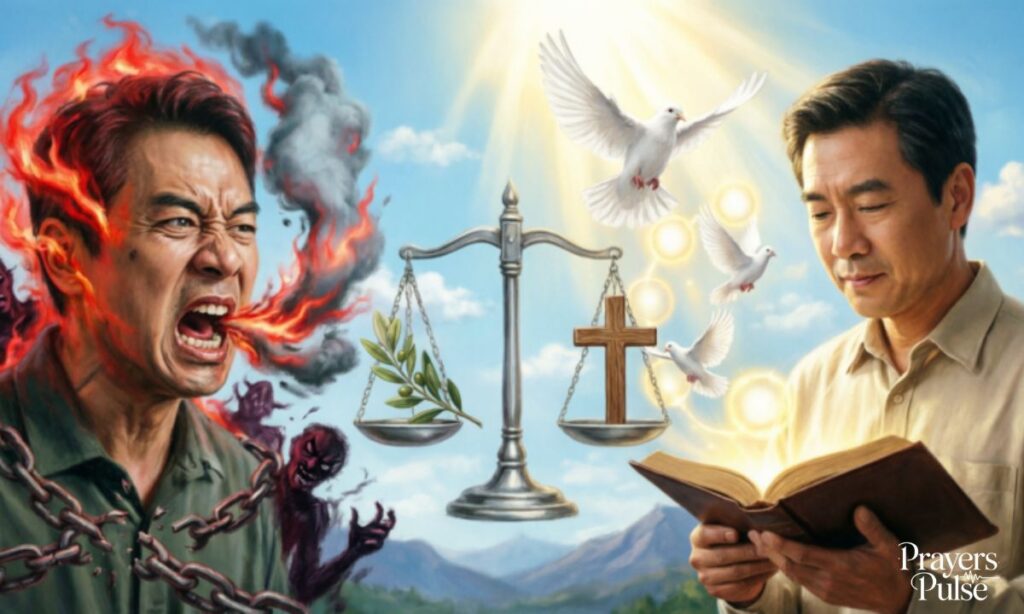
The Bible teaches that self-control is vital during difficult seasons, helping believers remain faithful, patient, and steadfast in the face of challenges. By trusting God’s promises, Christians can respond to trials with wisdom and endurance rather than fear or frustration.
Staying Alert Under Pressure (1 Peter 5:8)
- Peter warns believers to be alert and of sober mind because the enemy prowls like a roaring lion.
- This verse connects self-control directly to spiritual awareness and vigilance.
- Trials and pressure are often when self-control is tested the most intensely.
- Staying alert means not letting your guard down even when life feels overwhelming or exhausting.
- This is a call to spiritual readiness, not just behavioral discipline.
Spiritual Battles Require Discipline (Ephesians 6:12)
- Paul reminds believers that the real struggle is not against flesh and blood but spiritual forces.
- This reframes many personal battles with self-control as spiritual battles, not just personal weakness.
- Understanding the nature of the struggle helps believers respond with prayer and spiritual armor.
- Self-control during trials requires recognizing what is truly being fought against.
- This verse encourages a posture of spiritual seriousness rather than surface-level effort.
Endurance Through Restraint (Hebrews 12:1)
- Believers are called to throw off everything that hinders and run with perseverance.
- This involves intentionally setting aside distractions, sins, and unnecessary weights.
- Endurance requires ongoing restraint, not just a single burst of motivation.
- The image of a race reinforces that self-control is a long-term, sustained discipline.
- This verse encourages believers to keep their eyes on the goal throughout difficult seasons.
Strength Through Christ (Philippians 4:13)
- Paul declares he can do all things through Christ who gives him strength.
- This verse is often quoted, but in context it follows Paul describing contentment in any circumstance.
- Self-control during trials is shown as something sourced in Christ’s strength, not personal willpower.
- It reframes endurance and discipline as something accessible through dependence on God.
- This verse offers confidence that strength for self-control is always available through Christ.
Self-Control and Character Development
The Bible shows that self-control shapes a believer’s character, helping them grow in maturity, wisdom, and godly behavior. As Christians practice discipline through the Holy Spirit, they become more Christ-like in their decisions and daily actions.
A Mark of Spiritual Maturity
- Self-control is consistently linked throughout Scripture to growth and maturity in faith.
- Immature believers are often described as easily swayed, impulsive, or inconsistent.
- Mature believers demonstrate steadiness, restraint, and wisdom in their choices over time.
- Growth in self-control reflects deeper transformation happening internally, not just external behavior change.
- It is treated as evidence of a life increasingly shaped by the character of Christ.
Why Leaders Must Be Self-Controlled (Titus 1:8)
- Paul lists self-control as one of the required qualifications for church leadership.
- Leaders are called to be disciplined, upright, holy, and self-controlled in their conduct.
- This shows that self-control is not optional for those in positions of influence and responsibility.
- A leader’s discipline directly impacts the trust, example, and integrity they offer others.
- This verse elevates self-control from a personal virtue to a leadership necessity.
Bible Verses About Self-Control for Children and Families

The Bible teaches both children and families to practice self-control in daily life, guiding their words, actions, and choices with patience and love (Proverbs 22:6; Ephesians 4:29).
Teaching Self-Control Early
- Scripture encourages parents to train children in wisdom and discipline from a young age.
- Early habits often shape long-term character and decision-making patterns later in life.
- Teaching self-control early helps children build a foundation for emotional and spiritual maturity.
- Families play a critical role in modeling and reinforcing self-discipline in everyday situations.
- This is treated as an investment in a child’s future character and faith.
Simple Verses for Kids
- Proverbs 25:28 can be taught to children using the simple picture of broken city walls needing protection.
- Galatians 5:22–23 helps children understand self-control as part of a list of good spiritual fruits.
- James 1:19 teaches kids the practical habit of listening first and speaking carefully.
- These verses are short, visual, and memorable, making them easy starting points for young learners.
- Simple, repeated teaching helps self-control concepts take root early in a child’s understanding.
Modeling Discipline at Home
- Children often learn self-control more through observation than through verbal instruction alone.
- Parents demonstrating patience, calm responses, and consistency teach more than words ever could.
- A home environment of discipline and structure supports a child’s ability to develop their own self-control.
- Modeling includes how parents handle their own anger, stress, and impulsive reactions.
- Consistency between what is taught and what is modeled strengthens a child’s trust and learning.
Discipline With Love
- Biblical discipline is never separated from love, patience, and genuine care for a child’s wellbeing.
- Harsh or inconsistent discipline can discourage children rather than build healthy self-control.
- Correction paired with love helps children understand the purpose behind boundaries and rules.
- This balance reflects how God disciplines His own children — firmly, but always rooted in love.
- Loving discipline builds trust while still reinforcing the importance of self-control.
Practical Ways to Develop Self-Control Through Faith
The Bible teaches that self-control grows through a close relationship with God—by prayer, reading Scripture, and relying on the Holy Spirit. As believers stay connected to God daily, they gain strength to resist temptation and live with discipline and wisdom.
Prayer and Dependence
- Prayer is one of the most consistent practices connected to growing in self-control throughout Scripture.
- It shifts reliance away from personal strength and toward dependence on God’s power.
- Regular prayer helps believers stay spiritually alert and prepared for moments of temptation.
- Asking for help in weak areas is treated as wisdom, not failure.
- Self-control grows stronger as dependence on God grows deeper.
Daily Habits That Help
- Reading Scripture regularly helps renew the mind and reinforce godly thinking patterns.
- Setting consistent routines reduces the number of impulsive decisions made throughout the day.
- Practicing small disciplines, like waking up on time, builds strength for bigger challenges.
- Reflection and journaling can help identify patterns where self-control tends to break down.
- Small, consistent habits build the muscle needed for larger moments of restraint.
Avoiding Triggers
- Wisdom involves recognizing situations, places, or people that consistently lead to poor choices.
- Avoiding unnecessary exposure to temptation is a practical form of self-control in itself.
- This reflects the same wisdom Joseph displayed by physically removing himself from temptation.
- Identifying triggers in advance allows for better planning and preparation.
- Avoidance is not weakness — it is a strategic application of biblical wisdom.
Accountability and Support
- Scripture repeatedly emphasizes the value of community in supporting personal growth.
- Sharing struggles with trusted believers creates honesty and reduces feelings of isolation.
- Accountability partners can offer encouragement, perspective, and gentle correction when needed.
- Self-control grows stronger in community rather than through isolated personal effort.
- Being known and supported makes consistent discipline more sustainable over time.
How to Build Self-Control

- Start by surrendering the struggle honestly to God instead of relying purely on personal willpower.
- Identify specific areas of weakness rather than trying to fix everything all at once.
- Build small, consistent habits that train discipline gradually rather than expecting instant transformation.
- Stay connected to Scripture and prayer to keep your mind renewed and focused.
- Surround yourself with supportive, accountable relationships that encourage growth rather than excuse failure.
- Be patient with the process, understanding that spiritual fruit grows over time, not overnight.
Examples of Self-Control From Biblical Characters
The Bible shows self-control through faithful characters like Joseph, who resisted temptation in Egypt, and Daniel, who stayed disciplined in his devotion to God despite pressure. Their lives demonstrate how trusting God helps believers remain strong and obedient in difficult situations.
Joseph’s Resistance to Temptation
- Joseph repeatedly refused advances from Potiphar’s wife despite repeated pressure and opportunity.
- He chose integrity even when no one else would have known if he had given in.
- His self-control ultimately positioned him for the purpose God had planned for his life.
- Joseph’s story shows that self-control often requires short-term sacrifice for long-term faithfulness.
- His example remains one of the clearest pictures of moral discipline in all of Scripture.
Daniel’s Discipline and Conviction
- Daniel resolved not to defile himself with the king’s food and wine while in captivity.
- His self-control was rooted in conviction, not simply personal preference or stubbornness.
- Daniel maintained consistent prayer habits even when it placed his life at risk.
- His discipline extended beyond physical habits into spiritual faithfulness under pressure.
- Daniel’s life models steady, unwavering self-control across both small and high-stakes decisions.
David’s Restraint Toward Saul
- David had multiple opportunities to kill Saul, who was actively hunting him, yet he refrained.
- His restraint was rooted in respect for God’s authority over Saul’s position, not personal weakness.
- David’s self-control in this moment prevented an act of revenge that would have stained his future.
- This example shows self-control extending into how we treat people who have wronged us.
- David chose patience and trust in God’s timing over immediate personal justice.
Jesus as the Perfect Example of Self-Control
- Jesus faced direct temptation in the wilderness yet responded with Scripture instead of impulse.
- He remained silent before His accusers rather than defending Himself in anger or pride.
- Even during His crucifixion, Jesus demonstrated restraint instead of calling on power to retaliate.
- His entire life reflects perfect discipline aligned completely with the Father’s will.
- Jesus is presented as the ultimate model believers are called to imitate in self-control.
The Rewards of Practicing Self-Control According to Scripture
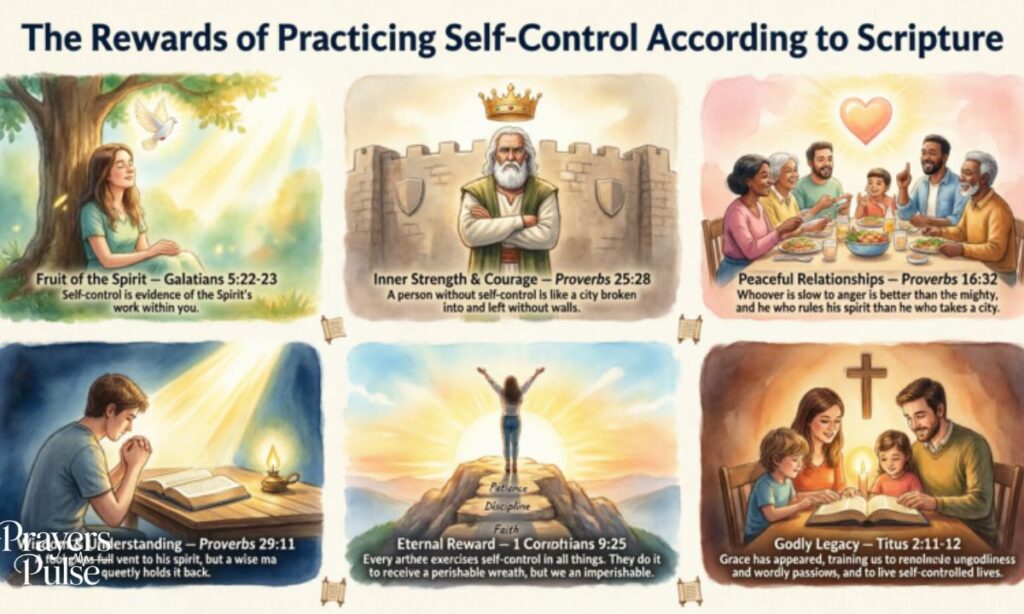
The Bible teaches that practicing self-control leads to spiritual growth, peace, and eternal reward, as believers gain victory over sin and live in closer obedience to God (Proverbs 25:28; 2 Timothy 1:7).
Greater Peace and Stability
- A disciplined life often produces less chaos, regret, and emotional turmoil over time.
- Self-control helps create a steady foundation rather than a life pulled in every direction.
- Peace grows when actions align consistently with values and convictions.
- This stability reflects an inward calm that comes from walking closely with God.
- A self-controlled life tends to experience fewer self-inflicted struggles and consequences.
Stronger Relationships
- Self-control improves how people communicate, especially during conflict or disagreement.
- Restraint in speech and anger protects relationships from unnecessary damage and hurt.
- Trust grows when others see consistency between someone’s words and their actions.
- Healthy boundaries, rooted in discipline, strengthen rather than weaken relationships.
- Self-controlled people tend to build deeper, more stable connections with others.
Spiritual Growth and Maturity
- Practicing self-control consistently reflects deeper transformation happening within the heart.
- It becomes evidence of the Holy Spirit’s ongoing work in a believer’s life.
- Spiritual maturity is marked by increasing consistency between belief and behavior.
- Growth in this area often leads to growth in other spiritual fruits as well.
- Self-control becomes both a sign of maturity and a tool for continued growth.
Eternal Rewards for Faithfulness
- Scripture connects faithfulness and discipline in this life to eternal significance.
- Living a self-controlled life is part of being found faithful in both small and great things.
- This reframes daily discipline as having lasting, eternal value beyond the present moment.
- Believers are encouraged that their efforts toward righteousness are not in vain.
- Eternal perspective offers motivation to persevere even when self-control feels difficult.
Bible Verses About Self-Control and Wisdom
The Bible teaches that self-control is closely connected with wisdom, helping believers make right decisions and avoid destructive choices (Proverbs 29:11; James 1:5).
Wisdom Helps You Make Better Choices
- Wisdom and self-control are closely connected throughout the book of Proverbs.
- Wise decision-making often requires the discipline to pause and think before acting.
- Self-control without wisdom can become rigid, while wisdom without self-control can become reckless.
- Together, they help believers respond to life’s situations with clarity and discernment.
- Seeking wisdom is presented as a key support system for practicing self-control well.
Patience as a Form of Self-Control
- Patience is frequently described in Scripture as a sign of strength rather than passivity.
- Choosing to wait, rather than react immediately, reflects deep internal discipline.
- Many poor decisions stem from impatience rather than a lack of knowledge.
- Patience allows space for wisdom and prayer before taking action.
- This form of self-control protects against impulsive choices made in haste.
Avoiding Foolish Decisions
- Proverbs repeatedly contrasts the wise person with the fool who acts without thinking.
- Foolish decisions are often the direct result of a lack of self-control in the moment.
- Slowing down to consider consequences is shown as a mark of wisdom and discipline.
- Avoiding foolishness requires consistent practice, not just good intentions.
- This connection reinforces that self-control protects against regret and unnecessary consequences.
Seeking God’s Guidance Daily
- Scripture encourages believers to seek God’s wisdom rather than relying solely on their own understanding.
- Daily guidance helps align decisions with God’s will rather than personal impulse or emotion.
- Seeking direction regularly builds a habit of dependence rather than self-reliance.
- This ongoing relationship strengthens both wisdom and self-control over time.
- Daily seeking reflects humility and a desire to grow continually in discipline.
Common Obstacles to Self-Control and How to Overcome Them
The Bible shows that self-control is often challenged by temptation, pride, and weak discipline, but these can be overcome through prayer, accountability, and relying on the Holy Spirit for strength and guidance.
Dealing With Persistent Temptations
- Some temptations return repeatedly, requiring ongoing vigilance rather than a one-time victory.
- Identifying patterns behind recurring temptation helps address root causes, not just symptoms.
- Persistent prayer and Scripture meditation help reinforce resistance over time.
- Avoiding situations that consistently lead to failure reduces repeated exposure.
- Patience with the process is essential, since lasting change rarely happens overnight.
Overcoming Negative Habits
- Breaking long-standing habits often requires replacing them with healthier, intentional ones.
- Small, consistent steps tend to be more effective than attempting drastic overnight change.
- Negative habits often thrive in environments lacking structure or accountability.
- Tracking progress can help maintain motivation during difficult stretches of change.
- Grace toward yourself during setbacks helps prevent giving up entirely.
Managing Stress and Emotional Reactions
- Stress often weakens self-control, making emotional reactions more likely and more intense.
- Recognizing stress triggers early can help prevent impulsive responses later.
- Healthy coping practices, like prayer and rest, support better emotional regulation.
- Slowing down during high-stress moments allows space for wiser, calmer responses.
- Emotional self-control grows stronger with consistent practice during smaller stressful moments.
Depending on the Holy Spirit for Strength
- Self-control is listed as a fruit produced by the Spirit, not manufactured through pure effort.
- Leaning on the Spirit shifts the source of strength from self to God.
- This dependence relieves the pressure of trying to achieve discipline through willpower alone.
- Prayer for the Spirit’s help is a consistent practice encouraged throughout Scripture.
- True, lasting self-control flows from this ongoing spiritual partnership.
God’s Grace When You Struggle With Self-Control
The Bible teaches that even when believers struggle with self-control, God’s grace is always available to forgive, restore, and strengthen them. Through repentance and reliance on His Spirit, He helps us grow in discipline and righteousness over time.
God Offers Forgiveness and Restoration
- Scripture consistently emphasizes that failure does not disqualify someone from God’s love or grace.
- Confession and repentance are presented as pathways back to restoration, not shame.
- God’s forgiveness is described as complete and freely given to those who seek it.
- Struggling with self-control does not mean someone has failed permanently in their faith.
- Grace meets people exactly where their weakness is most evident.
Learning From Failures Without Giving Up
- Every failure can become a lesson rather than a final verdict on someone’s character.
- Reflecting honestly on what led to failure helps prevent the same pattern from repeating.
- Giving up after failure often causes more long-term harm than the failure itself.
- Scripture encourages perseverance, even after stumbling multiple times.
- Growth is rarely a straight line, and setbacks are part of the process, not the end of it.
Growing Stronger Through Repentance
- Repentance involves more than guilt — it includes a genuine turning toward change.
- This process often strengthens character more than simply avoiding failure altogether.
- Honest repentance opens the door for the Holy Spirit to work more deeply in weak areas.
- Each cycle of repentance and growth builds greater long-term resilience.
- Struggles, when surrendered to God, can become opportunities for deeper transformation.
Trusting God’s Power to Transform Your Life
- Self-control ultimately is not something achieved alone through human effort and determination.
- Transformation comes through ongoing relationship and surrender to God’s power at work within.
- Trusting this process allows for grace during the journey rather than constant self-criticism.
- God’s power is described as sufficient even in areas of consistent personal weakness.
- Lasting change becomes possible not through perfection, but through continual trust and dependence on Him.
Frequently asked questions
What Does the Bible Say About Self-Control?
The Bible teaches that self-control is a fruit of the Spirit and an important part of Christian living.
Why Is Self-Control Important According to Scripture?
Self-control helps believers resist temptation and make choices that honor God.
Is Self-Control Considered a Fruit of the Spirit?
Yes, self-control is listed among the fruits of the Spirit in Galatians 5:22-23.
How Can Bible Verses Help Strengthen Self-Control?
They provide wisdom, encouragement, and guidance for overcoming daily challenges.
What Are the Benefits of Practicing Self-Control?
It promotes spiritual growth, wise decision-making, and a closer relationship with God.
Can Prayer Help Improve Self-Control?
Yes, prayer invites God’s strength and guidance to help believers exercise discipline.
Which Bible Verse Is Commonly Associated With Self-Control?
2 Timothy 1:7 is often quoted because it reminds believers that God gives power, love, and self-discipline.
How Does Self-Control Relate to Christian Discipline?
It helps Christians remain faithful, obedient, and focused on God’s will.
Can Self-Control Help Overcome Temptation?
Yes, biblical self-control equips believers to resist sinful desires and make godly choices.
What Is the Main Message of Bible Verses About Self-Control?
They encourage believers to rely on God’s strength to live disciplined and spiritually mature lives.
Conclusion
Bible Verses About Self-Control: Strengthening Discipline Through God’s Word remind believers that self-control is a vital spiritual virtue empowered by God’s grace. These scriptures encourage discipline, wisdom, and the ability to resist temptation while living according to God’s will. They provide strength and guidance for developing a life rooted in faith and obedience.
Ultimately, Bible Verses About Self-Control: Strengthening Discipline Through God’s Word highlight that true self-control comes not merely from human effort but through the work of the Holy Spirit. By applying God’s Word daily, believers can grow in character, make wise choices, and honor God in every aspect of life. This makes self-control a powerful foundation for spiritual growth and lasting transformation.

Denzel is a passionate faith writer with four years of experience in prayer and Bible blogging. He now contributes has expertise to PrayersPulse.com, creating inspiring content that strengthens prayer life and deepens understanding of Scripture.